Starbucks Opens First India Tech Office in 2027 — Here's What It Means for Indian Tech Jobs
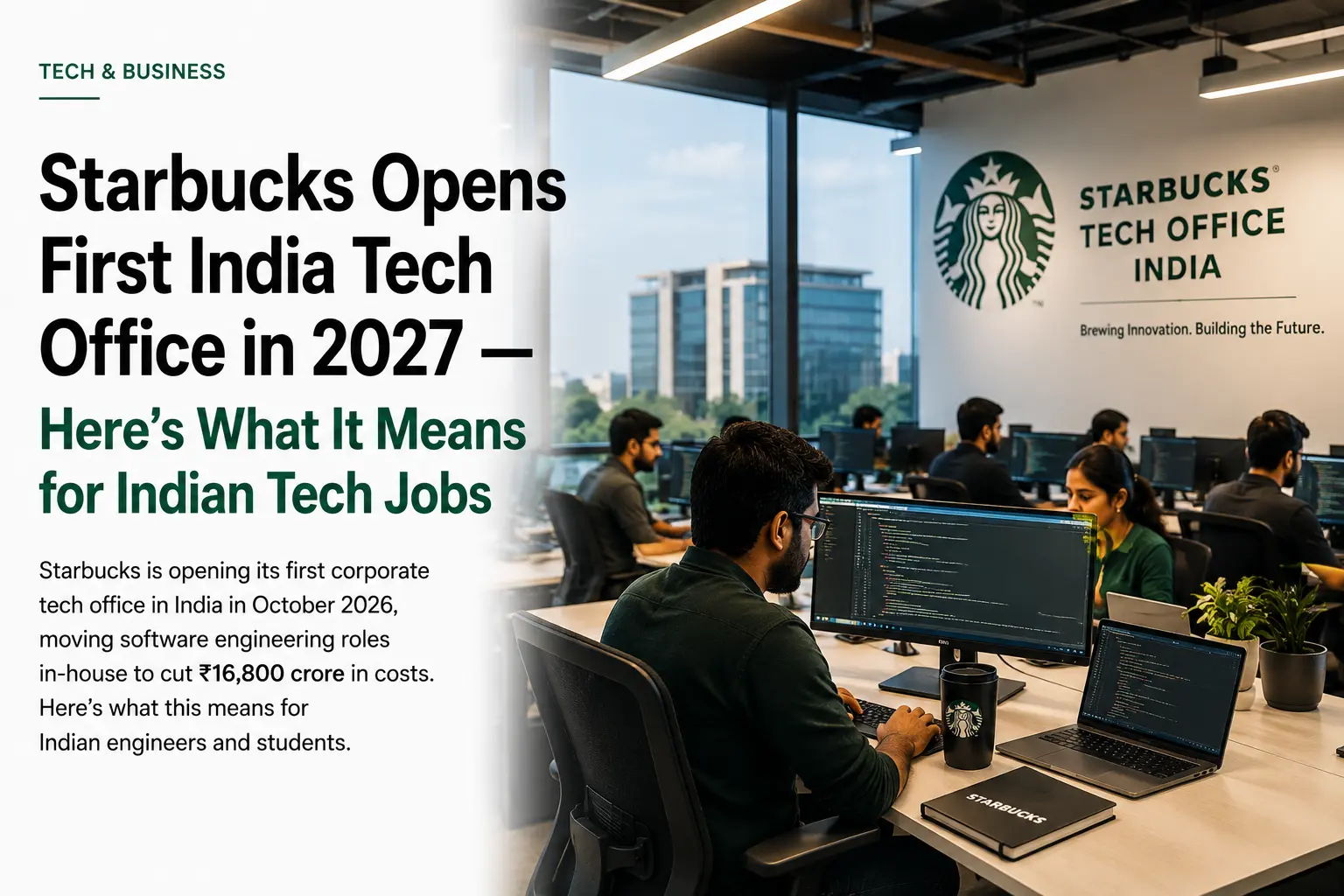
Starbucks is bringing its technology jobs to India, announcing it'll open its first corporate tech office in the country starting in October 2026 — that’s fiscal year 2027 for the company and a major move. Big deal. And why? Because they need to cut a staggering ₹16,800 crore from their global budget, and moving tech work here helps them do that while keeping talented engineers on the team. Think about it. This isn't just business news; it's a signal of something bigger happening in how global companies see India as a tech hub, not just as support staff.
- Opening date: October 2026 — The new corporate tech office isn't a maybe; it's launching as part of a massive ₹16,800 crore cost-cutting plan.
- Jobs moving in-house — They're ditching third-party vendors. That work's moving to Starbucks' own Indian team. Period.
- Who benefits — It's a huge win for Indian software developers, cloud engineers, cybersecurity pros, and other tech talent in major cities.
- Part of global shift — This isn't happening in a vacuum. Starbucks already laid off 10% of its global corporate staff but is now expanding tech in more affordable markets like India and Nashville.
- Scale of change — The goal? Slash reliance on pricey external vendors and bring key tech roles directly in-house, not just in one place but several.
- What to watch — Keep an eye on the Starbucks careers page around mid-2026 for job postings. The exact city locations? They haven't announced them yet, but they will soon.
And here's why that matters.
Why Starbucks Suddenly Needs India
So here's what happened. Starbucks CEO Laxman Narasimhan took over and realized the company was spending way too much money — we're talking ₹16,800 crore too much. That stings. So he made a choice that's becoming pretty common among big American companies: stop paying expensive American salaries and vendors, and hire smart engineers in places like India where the cost is lower. Right? It isn't about getting cheap labor; it's about moving work that's already being done somewhere else and doing it more efficiently.
The company already has Starbucks stores all over India selling coffee to millions of people, but it never had a tech team based here building software. Not anymore. That changes in 2027, and for Indian engineers, this is huge. No joke. Starbucks isn't opening a call center or data entry office; it's opening a corporate technology office—meaning real, challenging software engineering work. The kind that pays well. So what does this actually mean?
Wow.
Think about this. If you're a 25-year-old software engineer in Bangalore or Pune right now, suddenly there's a global coffee company looking to hire dozens of experienced developers. That's real. Not freshers, but people who actually know how to build the systems that run international businesses. And? It means better job options, more competition, and higher salaries as companies fight for the best talent.
The kind of thing most people miss.
What Actually Happened and When
Let's be clear about the timeline here. In early 2026, Starbucks announced a massive restructuring and cut 10% of its corporate workforce globally — that's thousands of people — and decided to move some tech jobs to Nashville, Tennessee. And now? But that's not the full story. Key point. At the same time, they started planning a bigger push into India. Is this really a surprise?
- The ₹16,800 crore goal — That's the total savings Starbucks is hunting for by making operations leaner and shifting work to lower-cost hubs.
- Outsourced roles becoming in-house — They're bringing work currently done by outside vendors in-house to the new India office.
- October 2026 start date — Their fiscal year 2027 begins then, and that's the official opening day for the new office.
- Technology focus — Don't get it twisted. This isn't customer service or supply chain; it's real software development and IT infrastructure.
- Cost advantage without quality loss — India's got millions of skilled engineers, so Starbucks saves money without sacrificing talent.
- Part of global strategy — And it's the same playbook McDonald's, Google, and Microsoft have already used successfully in India.
The announcement came quietly in internal company communications, not a big press release. And? That's actually typical—companies don't want to announce layoffs and new hires at the same time. That's the truth. It feels bad for the people losing jobs.
Period.
But not for the reasons you'd expect.
What Experts Actually Think This Means
Here's where it gets interesting. This isn't Starbucks being cheap or moving away from quality. Big shift. It's actually a smart business move that signals something important about India's role in the global tech world. And more. But who really benefits here?
Tech industry analysts see this as confirmation of a trend that's been building for five years—American and European companies aren't just outsourcing anymore. Let that sit. They're actually moving real decision-making power and engineering work to India. A decade ago, India handled the boring stuff. Not anymore. Now? India builds the systems that run global apps. A developer in Bangalore could be designing features used by millions of people worldwide. That's career work. That's real impact.
From Starbucks' perspective, here's the math. A senior software engineer in San Francisco costs them ₹1 crore per year in salary plus benefits. The same engineer in Bangalore costs ₹50 lakh. Facts. Same talent, half the cost. Worth it. When you're trying to cut ₹16,800 crore, that math matters. But here's the thing—Starbucks isn't building a team of junior developers. They're building a corporate technology office, which means senior people leading projects, architects designing systems, security experts protecting customer data. That's different from a typical outsourcing center. And where does that leave the rest of us?
Worth paying attention to.
How This Actually Affects You
Let's get specific. If you're a software developer in India, this is good news. Big. More jobs. More options. The result? Companies competing for talent means your salary goes up. It's simple supply and demand.
If you're studying engineering right now—say you're in second or third year at a college in Delhi, Mumbai, or Hyderabad—this matters to you directly. Think. When you graduate in 2-3 years, there will be more corporate tech jobs available. Huge. Not just startup jobs. Real corporate jobs with stability, benefits, and proper career paths. A job at the Starbucks tech office looks a whole lot different on your resume than a job at some startup that might shut down in two years.
But here's what to actually do right now. If tech interests you, learn the skills Starbucks actually needs. Yep. Cloud computing, cybersecurity, software development in modern languages like Python, Java, and Go. Learn how to work with artificial intelligence and machine learning because that's what every major company is building now. Unreal. By the time 2027 comes and Starbucks starts hiring, you'll be ready. How often do you see something like this?
For students not in tech—if you're in business, supply chain, or operations—there's something here too. And more. A global company opening an office in India needs people beyond just engineers. True. Finance people. Operations managers. People who understand how Starbucks runs.
Big shift.
And that's just the beginning.
What Comes Next and When
Here's what to actually watch for. Between now and October 2026, Starbucks will announce where the office will be. Wild. It could be Bangalore. Could be Hyderabad. Could be multiple cities. And now? Wherever it opens, that city's real estate prices for office space will jump slightly, office workers will get more job options, and the local tech ecosystem gets stronger. But here's the real question—what happens next?
Starting July or August 2026, job postings will appear. Look for these titles: “Senior Software Engineer,” “Cloud Infrastructure Engineer,” “Cybersecurity Engineer,” “Product Manager.” Not small. These are real, high-paying positions. Read that again. Not entry-level.
Most likely scenario? Starbucks hires 50-150 people in the first year, growing to 300+ by 2029. The result? That's based on how Microsoft, Google, and other tech companies have expanded in India. Best case? They expand faster than expected because they find great talent and decide to move even more work here. That's the truth. Worst case? Economic slowdown makes them hire slower, or they change their strategy. But based on what's happening across Silicon Valley right now, moving to India is becoming the default plan, not the exception.
The numbers don't lie.
Frequently Asked Questions About Starbucks India Tech Office
What exactly is Starbucks opening in India?
Here's the short version: it's a corporate technology office, not another coffee shop. They're hiring their own engineers in India to build the software that runs their global apps and websites instead of outsourcing it. It's pure tech, not customer service.
When will the office actually open and start hiring?
Simply put, the office officially opens in October 2026, marking the start of their fiscal year 2027. However, you won't have to wait that long to see jobs. Job postings will likely appear 2-3 months beforehand, so keep a close eye on their careers page around July or August 2026. This gives you plenty of time, so if you're interested, you should start preparing your resume and sharpening your tech skills right now.
What kind of jobs will Starbucks India have?
Look — they'll be hiring for core tech roles: software developers, cloud engineers, cybersecurity specialists, and product managers. These aren't entry-level jobs; they're well-paying positions for experienced professionals with at least 2-5 years of solid experience in the field.
How much will these jobs pay?
Honestly — you can expect the pay to be very competitive, right in line with what other major tech companies are offering in India. For example, a senior engineer can typically earn between ₹20-40 lakh annually, based on their specific experience and skillset. On top of that, the benefits packages are usually robust, including health insurance, retirement plans, and often flexible or remote work options.
Why is Starbucks doing this now instead of before?
Good question. It all comes down to a massive cost-cutting goal of ₹16,800 crore set by the new CEO. It's not about being cheap; it's about efficiency. Moving tech work to India allows them to access world-class engineering talent at a lower cost, a proven strategy for global companies.
Think.
The Bigger Picture Here
This isn't just about Starbucks hiring people. It signals something bigger about how the world works now. Nobody talks about this. Twenty years ago, American and European companies thought India was just for cheap labor. Not anymore. Now? They're moving actual engineering and decision-making work here because the talent is real and the cost makes sense. And why does this matter right now?
Watch for this pattern to continue. If Starbucks does this, others will follow. Yep. That means more jobs, more growth, more opportunities for young Indians in tech. But it also means competition. You need to be good at what you do.
Start preparing now. Learn the skills. Build projects. Get experience. Period. By 2027, when Starbucks starts hiring, you'll be ready. And that's big.