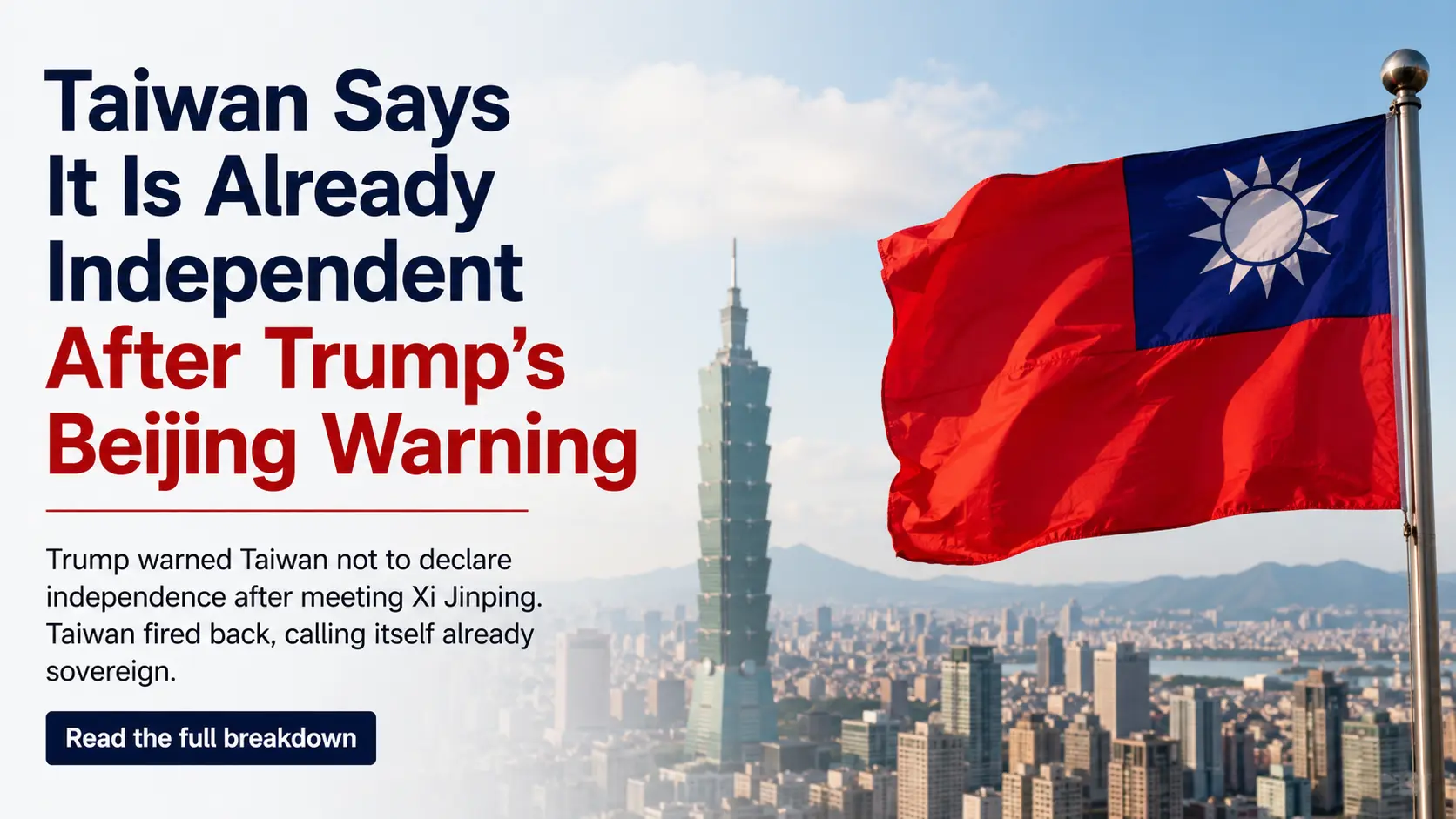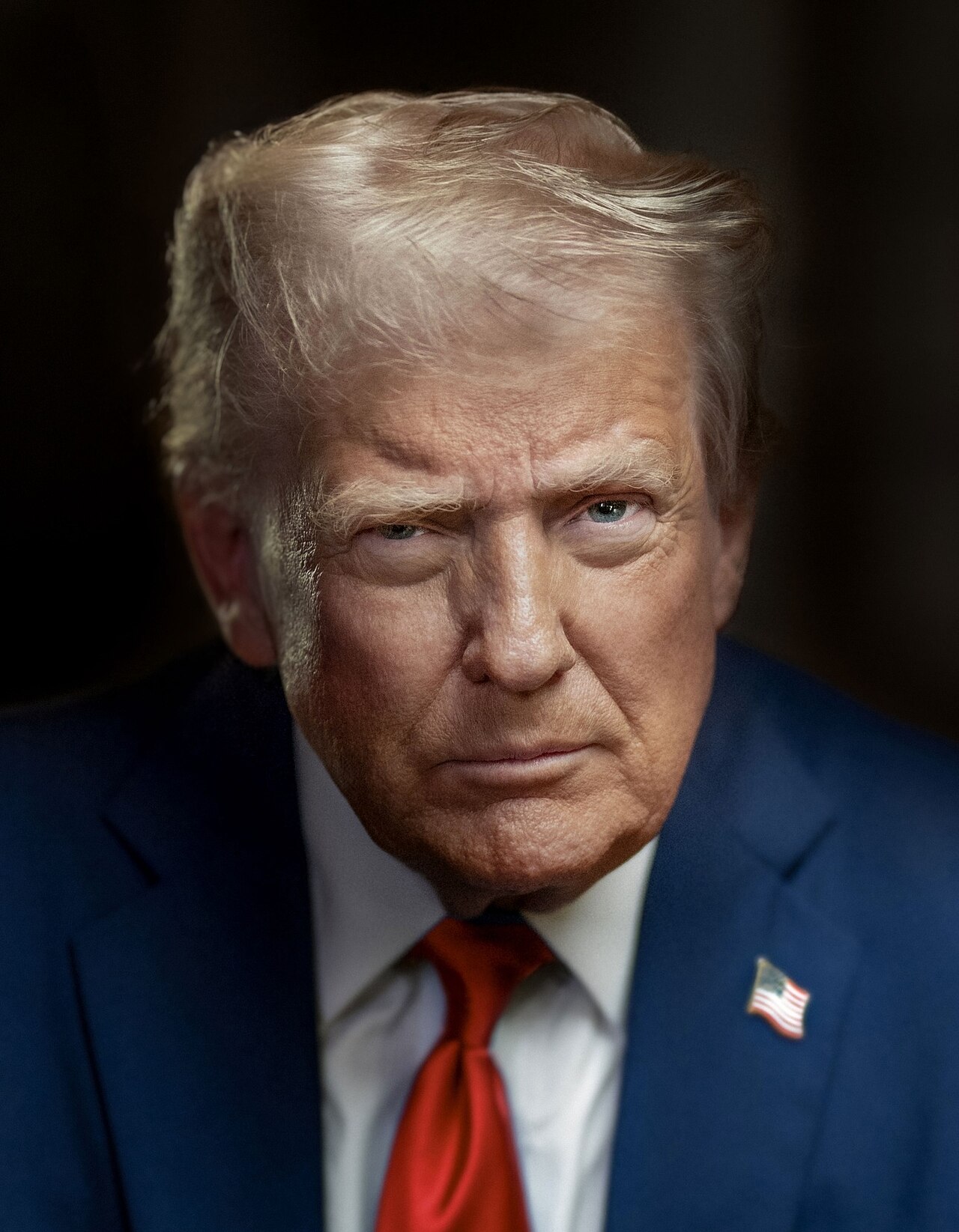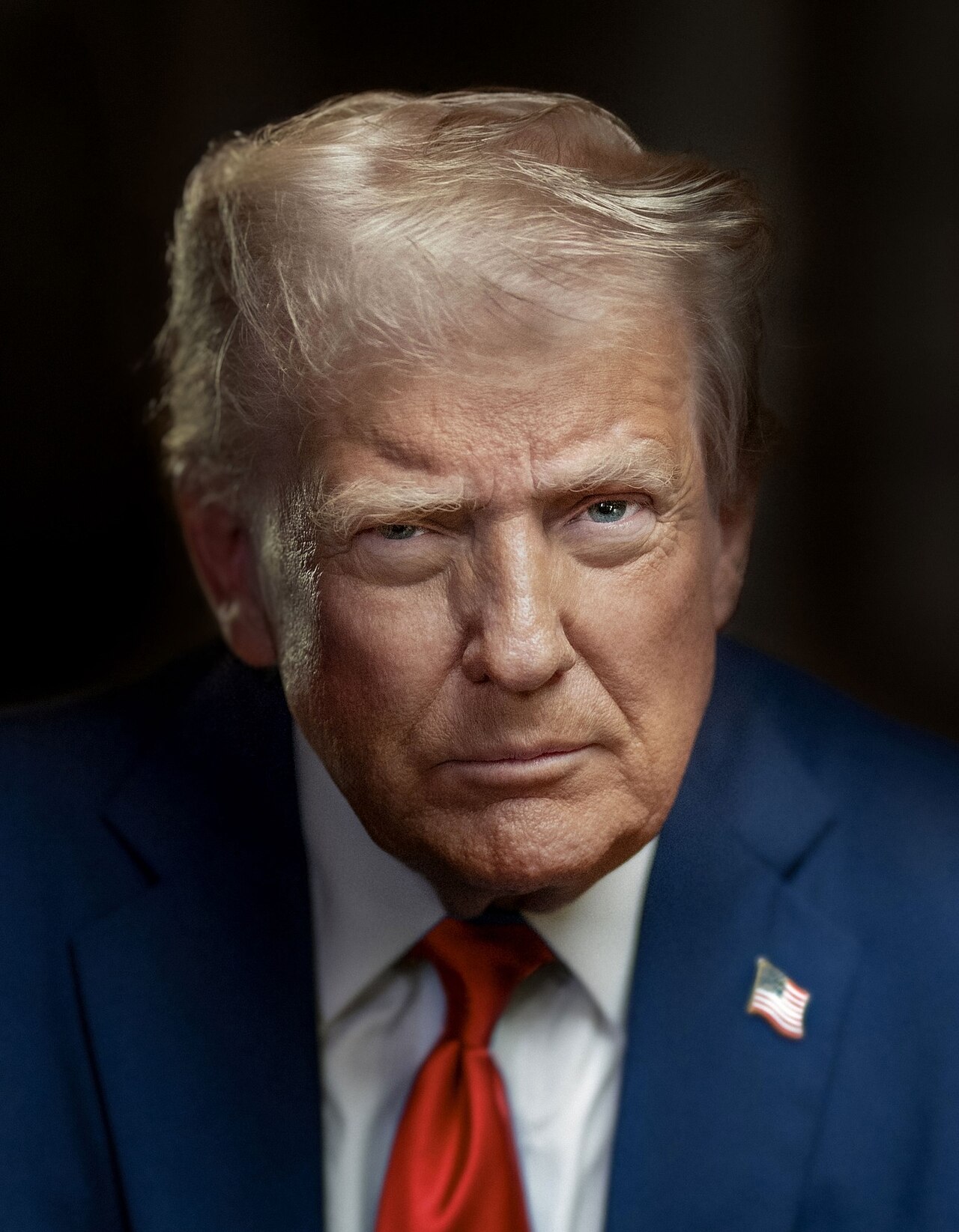
Trump Warns Taiwan Not to Declare Independence After Xi Summit
Nobody saw this one coming; just hours after sitting down with China's President Xi Jinping—one of the biggest diplomatic meetings of 2026—US President Donald Trump turned around and told Taiwan to back off from any idea of declaring itself an independent country. Wow. Not tomorrow. Not ever, if Beijing has its way. That's real. For 23 million people living on the island of Taiwan, this statement landed like a thunderclap. And for India, which watches the US-China power game very closely, this isn't just a faraway story. Not small. What happens between Washington, Beijing, and Taipei shapes the entire world order—including where India stands in it.
- Just hours after his 2026 summit with China's Xi Jinping, Trump warned Taiwan against declaring independence.
- Xi directly labeled Taiwan as “the most important issue” for the US and China, warning Trump to stop selling arms to the island.
- With 23 million people, Taiwan wasn't invited to the meeting but faces the biggest impact from any deal made.
- While the US has long sold weapons to Taiwan, Xi's demand to halt these sales jeopardizes billions in deals.
- Tensions in the region were already high in 2026, and Taiwanese officials were on high alert before the summit even started.
- For India, a closer US-China relationship complicates its strategic position in Asia, making this a critical story to watch.
The kind of thing most people miss.
Why Taiwan Is Such a Big Deal — And Why It Keeps Coming Up
Let's start from the very beginning, because this story has roots going back decades—a civil war back in 1949 where the losing side fled to Taiwan and set up their own government. Think. Taiwan is a small island, about the size of Jharkhand, sitting just off the coast of China. True. Since then, Taiwan has run itself as a separate country, with its own elections, army, and currency. But China has never accepted this. Period. Beijing says Taiwan is a part of China—full stop, no argument.
Look, the United States has been walking a very careful line for decades—it doesn't officially recognize Taiwan as an independent country, but it also sells weapons to Taiwan to help it defend itself. Right? That's the deal that has kept an uneasy peace in place for over 70 years. Not anymore. But now, in 2026, that balance is shaking. And the latest Trump-Xi summit—one of the most watched diplomatic meetings of the year—has made things even more complicated.
So why does this matter to you, sitting here in India? Key point. Because the US, China, and Taiwan triangle affects global trade routes, military alliances, tech supply chains, and most importantly, how America and China treat every other country—including ours. Big deal. When these two giants shake hands or clash, everyone feels it.
Wow.
And here's why that matters.
What Actually Happened at the Trump-Xi Summit
Here's what went down. Trump and Xi Jinping held a major summit in 2026—the kind of meeting that diplomats spend months preparing for. And? Taiwan sat right at the top of China's list of demands. No joke. Xi made his position crystal clear: the Taiwan question is non-negotiable for Beijing.
- Xi's direct warning to Trump: The Chinese president told Trump that selling weapons to Taiwan is a deeply sensitive issue for China and urged the US to handle it with “extreme caution.” In diplomatic language, “extreme caution” basically means “please stop.”
- Trump's response — hours after the summit: Instead of defending Taiwan's right to choose its own future, Trump publicly warned Taiwan against declaring independence. He said he wants both Beijing and Taipei to “cool down” tensions.
- Taiwan was not in the room: The 23 million people of Taiwan had zero say in this conversation. Their future was being discussed between two other countries — and that is what has Taipei officials on edge.
- Arms sales — the big money question: The US has sold billions of dollars worth of military equipment to Taiwan over the years. Xi specifically asked Trump to stop this. Whether Trump agrees or not will determine Taiwan's ability to defend itself.
- 2026 — a sharp change from 2025: At the previous Trump-Xi meeting, China deliberately kept Taiwan off the agenda. This year, Beijing put it front and centre. That shift alone tells you how urgent China sees this issue right now.
- Taiwan officials on high alert: Even before the summit happened, Taiwan's government was watching nervously — worried that Trump might give away too much without consulting them first.
Trump's exact words were that he wants the two sides to “cool down.” Simple words, but they carry enormous weight. Huge. Because historically, US presidents have been very careful not to tell Taiwan what it can or can't do. Let that sit. Trump just crossed that line—at least in tone.
And Xi—a leader known for patience and precision—made his feelings unmistakably clear. Wild. The Taiwan question, he said, is “the most important issue in China-US relations.” Read that again. Not trade. Not technology. Not nuclear weapons. Taiwan. That's the truth. That should tell you everything about how serious Beijing is.
Period.
But not for the reasons you'd expect.
What Is Really Going On Behind the Scenes
Now here's where it gets interesting. Think about it. This isn't just about Taiwan. And that's big. This is about who controls the most powerful relationship in the world—the one between America and China. But who really benefits here?
Think of it this way. Xi wants Trump to back off on Taiwan. Trump wants Xi to cooperate on trade deals, stop fentanyl from coming into America, and maybe help with a dozen other things. The result? So they're basically bargaining. That stings. Taiwan—a democratic island of 23 million people—is sitting in the middle of that bargain, hoping it doesn't get traded away like a pawn on a chessboard.
From China's side, the logic is simple—Xi has told Trump directly that if the US doesn't want problems, it should stop poking the Taiwan wound. Facts. Beijing has always seen Taiwan as its own territory. And now? Any move towards formal independence by Taipei is seen in Beijing as a reason to use military force. And China has never promised to give up that option.
From America's side, there are two very different camps. One camp—mostly in the military and foreign policy world—says America must keep supporting Taiwan firmly. Nobody talks about this. Because if China takes Taiwan, it changes the entire balance of power in Asia. Big shift. The other camp, closer to Trump's way of thinking, asks: why risk a war with China over an island that isn't even officially a US ally?
From Taiwan's side—and this is the perspective that gets the least coverage—ordinary Taiwanese people are watching this with real fear. Yep. They've built a thriving democracy over decades. And more. They have free elections, a free press, and a standard of living that's the envy of the region. They don't want to become part of China's political system. Worth it. And they're scared that Washington might quietly agree to let Beijing apply more pressure in exchange for trade concessions.
For India, this situation is a reminder of how quickly the world's power equations can shift. Unreal. India has its own complicated history with both the US and China. New Delhi watches events like this closely. Big. Because a stronger, bolder China on the Taiwan front could mean a more aggressive China on the Himalayan border too.
Not something you see every day.
How This Could Affect Ordinary People — Including You
You might be wondering—okay, but what does Taiwan have to do with my life in India? Fair question. Let me explain.
Taiwan makes most of the world's advanced computer chips—the tiny parts inside every smartphone, laptop, car, and hospital machine you use. No joke. If something goes wrong in Taiwan—a war, a blockade, a major political crisis—chip supplies collapse globally. The result? Prices of electronics shoot up. Think about the last time you bought a phone or a laptop. Now imagine that price doubling overnight because the chips needed to make it are no longer available. That's the scale of Taiwan's importance to the global economy.
For a tech startup founder in Bengaluru, this is a nightmare scenario. For a student who needs a laptop for college, this hits directly in the pocket. That stings. For India's growing electronics manufacturing industry—which is trying to compete with China—a Taiwan crisis throws every single plan off track.
And then there's the bigger picture. Think. If the US steps back from defending Taiwan, countries across Asia will notice. Big shift. Japan, South Korea, the Philippines—and yes, India—will all reconsider how much they trust American security commitments. That changes alliances, that changes defense spending decisions, and that changes how India positions itself between the US and China.
Right now, India's walking a careful line—keeping strong ties with the US while not completely cutting off economic engagement with China. Right? Any dramatic change in the US-Taiwan-China triangle forces India to pick sides more clearly. And that's big. And that's a conversation no government in New Delhi wants to rush into.
So what should you do? Key point. For now—watch this closely. Let that sit. If you work in tech, trade, or anything connected to global supply chains, keep an eye on how Trump's Taiwan position develops over the next few months. The decisions made in Washington and Beijing in 2026 will echo through Indian markets and Indian foreign policy for years.
Think.
Worth paying attention to.
What to Watch For Next
The summit has happened. The words have been spoken. But the real decisions are still being made behind closed doors. And now? Here's what matters in the coming weeks and months.
First—will the US announce any freeze or cut in arms sales to Taiwan? That's the clearest signal of how far Trump is willing to go to please Beijing. Huge. If American weapons shipments to Taiwan slow down or stop, that's a massive win for Xi and a major red flag for Taiwan's security.
Second—how will Taiwan's government respond? Is this really a surprise? Taipei can't afford to stay silent. Think about it. If Taiwan's leaders push back strongly against Trump's “cool down” message, it could create a serious diplomatic fight between Washington and Taipei—two sides that are supposed to be friends.
Third—watch China's military activity around Taiwan. Every time diplomatic pressure rises, China tends to run military exercises near Taiwan's waters and airspace. Yep. If those exercises increase after this summit, it means Beijing feels emboldened by what Trump said. Facts.
Best case: Trump's “cool down” message works as a temporary pressure valve. Both sides step back, arms sales continue quietly, and a tense but stable situation continues. The result? Most likely: The US and China keep negotiating behind the scenes, Taiwan stays on edge, and the world watches nervously to see who blinks first. That stings. Worst case: China reads Trump's statement as a green light to apply far more pressure on Taiwan—economic, military, diplomatic—and the whole region slides toward a crisis that no one is truly prepared to handle.
One specific thing to watch: Whether Trump and Xi schedule a follow-up call or meeting before the end of 2026. Big deal. If they do, Taiwan will almost certainly be back on the agenda. And that's big. And whatever comes out of that conversation will matter enormously.
And that's just the beginning.
Frequently Asked Questions About Trump, Xi, and Taiwan
Why did Trump warn Taiwan not to declare independence?
Honestly — this was a direct response to pressure from China's President Xi Jinping at their 2026 summit. Trump's “cool down” warning to Taiwan was a clear gesture to Beijing, showing he's willing to play ball.
What does China want from the United States on Taiwan?
Simply put, China wants two big things from the US. First, an immediate stop to all weapons sales to Taiwan, which it sees as foreign interference. Second, it wants Washington to stop giving Taipei any political or diplomatic support that might encourage a declaration of independence. Xi made it clear to Trump that this isn't a side issue; it's the absolute core of the US-China relationship.
How does the Taiwan issue affect India?
Here's the short version: Taiwan is the world's microchip factory. Any conflict there would wreck global supply chains, causing prices for electronics in India to skyrocket. It also forces New Delhi to re-evaluate its reliance on US security promises.
Will the US stop selling weapons to Taiwan after this summit?
The thing is, nobody knows for sure yet, and that's the problem. While Xi explicitly asked Trump to halt the sales, Trump hasn't given a public yes or no. This ambiguity is intentional. The Pentagon and many in Congress strongly support continuing the sales, creating a political battle in Washington. The final decision, or lack thereof, will be the clearest sign of where US policy is headed.
What is the latest update on the Trump-Xi Taiwan talks in 2026?
Look — the main update is that the summit happened, and Trump responded to Xi's demands by telling Taiwan to "cool down" and avoid declaring independence. So far, no concrete deals on arms sales have been announced, leaving everyone, especially in Taipei, waiting nervously for the next move.