Your dream home just got more complicated. Home prices are climbing faster than salaries in most Indian cities, and getting a loan has become trickier than ever before. In 2026, the property market is sending mixed signals — some cities are booming while others are stuck, and most Indians trying to buy their first home are feeling the squeeze in their wallets.
This isn't just about numbers on a spreadsheet. For a young couple in Bangalore earning ₹50 lakh a year combined, buying even a modest two-bedroom flat now means spending nearly ₹1.2 crore — that's almost 24 years of salary before even thinking about children's school fees or retirement. So what's actually changing in India's property market right now, and how does it affect you?
- Property prices jumped 12-18% across major cities in 2025-26 — Delhi, Mumbai, Bangalore, and Hyderabad saw the biggest increases, making homes less affordable for middle-class buyers
- Home loan interest rates stayed between 8.5% to 9.5% — higher than 2024, making monthly payments bigger and stretching household budgets tighter
- Affordable housing segment (flats under ₹50 lakh) is shrinking — developers are building fewer budget homes and focusing more on luxury projects that earn bigger profits
- RERA (Real Estate Regulation Act) enforcement got stricter — more builder accountability but also slower project completions in some cases
- Rental yields dropped to 2.5-3.5% annually — meaning property investors aren't earning as much money from rent compared to previous years
- Government's affordable housing push continues — but demand still far exceeds supply, leaving lakhs of families waiting for homes they can actually afford
Why Home Prices Keep Climbing When Salaries Aren't
Here's the hard truth. India's property market doesn't work like other markets. It's not driven by what ordinary people can afford — it's driven by what builders think they can sell and what investors think they can flip for profit. Land costs in cities have become insanely expensive, construction materials keep getting pricier, and there's simply not enough good land left in the places where people actually want to live and work.
The Reserve Bank of India (RBI) kept interest rates high through 2025 to fight inflation. That meant home loan rates stayed stuck at 8.5% to 9.5% — compared to 7.5-8% in 2023. Every 0.5% increase might seem small, but it actually adds ₹10,000-15,000 to your monthly payment on a ₹50 lakh loan. That money has to come from somewhere — usually it comes from food budgets, school fees, and emergency savings.
Meanwhile, more and more people are moving to cities to find jobs. Mumbai's population grew by nearly 5 lakh people in 2024 alone. Bangalore, Hyderabad, and Pune are expanding even faster. But the number of homes being built hasn't kept pace. When demand explodes and supply stays flat, prices shoot up. This is basic economics — and it's why your cousin's three-bedroom flat in Mumbai jumped from ₹2.5 crore in 2023 to ₹2.95 crore in 2026.
What Actually Happened: The 2026 Property Market Snapshot
Let's break down exactly what changed and what's staying the same:
- Delhi NCR prices jumped 15% year-on-year — A typical three-bedroom flat that cost ₹75 lakh in 2025 now costs ₹86 lakh. Office workers and teachers are getting priced out completely. Flats are still being built, but fewer affordable options and more luxury towers.
- Mumbai property prices rose 14%, the steepest in 5 years — Micro apartments (1 BHK flats under 500 sq ft) are now ₹80 lakh to ₹1.2 crore depending on location. Families who could afford Mumbai a decade ago now have to look at Navi Mumbai or Thane instead.
- Bangalore and Hyderabad saw 12% increases — The IT boom continues, attracting young professionals willing to pay premium prices. That's pushing out people in older professions and making the city less diverse economically.
- Home loan applications dropped 8% in Q4 2025 — Banks approved fewer loans because interest rates were high and property prices had jumped beyond what most applicants could qualify for. This is the clearest sign that ordinary people are stepping back from the market.
- Affordable housing projects delivered only 2.8 lakh units in 2025 — But demand is still over 15 lakh units annually. The gap between what people need and what's available keeps getting wider.
- Rental market became more attractive than buying — In many cities, renting is now 30-40% cheaper than paying a home loan on the same property. Landlords are struggling to find tenants, causing rental prices to stay flat or drop slightly.
The data shows a market pulling in opposite directions. Wealthy investors and NRIs (Non-Resident Indians) are still buying, which keeps prices high. But middle-class Indians — teachers, nurses, accountants, government workers, small business owners — are stepping back because the math no longer works for them.
The Real Picture: Who Benefits, Who Gets Left Behind
Here's what experts are actually saying, stripped of the fancy talk.
Government perspective: The housing ministry is pushing harder on its Pradhan Mantri Awas Yojana (PM-AY) scheme, which promises subsidized loans and direct grants for poor and middle-income families buying their first home. But funding hasn't kept pace with demand, and bureaucratic delays mean that thousands of approved applicants are still waiting for money that was promised to them two years ago.
Builder and developer perspective: Real estate companies are facing a choice. Build affordable housing and earn smaller profits, or build premium homes and apartments and rake in massive margins. Most are choosing the latter. Prices per square foot tell the story — luxury apartments in Bangalore now sell for ₹15,000-18,000 per sq ft, while affordable projects struggle to even get projects off the ground at ₹4,500-5,500 per sq ft because construction costs have climbed so high.
Bank and lender perspective: Banks tightened their lending criteria because they got burned by non-performing loans (people defaulting on home loans) during the pandemic. Now they want borrowers earning minimum ₹5 lakh monthly for a ₹50 lakh loan — that's an extremely high threshold that excludes most ordinary Indian families. RERA (Real Estate Regulation and Development Act) rules are also stricter now, which means slower project approvals but fewer scams.
Ordinary buyer perspective: Most people are stuck. Prices are too high. Loan rates are too expensive. Monthly payments are crushing. So families are either delaying home purchases, moving to cheaper cities, or deciding to rent indefinitely.
Location comparison shows the divide starkly. A three-bedroom flat in central Mumbai costs ₹3.2 crore. The same flat in Mumbai's suburbs costs ₹1.8 crore. In Pune, it's ₹1.1 crore. In Nagpur, it's ₹65 lakh. So where people can afford to live is becoming increasingly separated from where the best jobs are located. That means longer commutes, wasted hours, and spreading families thinner across different cities.
How This Hits Your Wallet and Your Life Choices
Let's get specific about what this actually means for you and people like you.
If you're a first-time home buyer: You're probably postponing. A government employee earning ₹60,000 monthly in Hyderabad can realistically afford a ₹35 lakh property (using the old rule that a home should cost 3-4 times your annual income). But the cheapest decent one-bedroom flat in a safe area costs ₹50-60 lakh now. You're facing a gap of ₹15-25 lakh that your salary simply can't cover. So you either save for 5-7 more years, ask parents for help (which not everyone can do), or settle for a worse location with longer commutes.
If you're renting: This might actually be your best option right now. Rent in most Indian cities is growing slower (2-4% annually) compared to home prices (12-18% annually). If you're renting a two-bedroom flat for ₹25,000 monthly, buying the same property would cost you ₹45,000-50,000 monthly in loan payments — that's 80-100% more. Even accounting for the tax benefits of owning, renting is mathematically smarter for now.
If you're planning to invest: Real estate as an investment is getting less attractive. Rental yields (the money you earn annually from rent as a percentage of what you paid to buy) have dropped to 2.5-3% in major cities. That means you'd take 30-40 years to recover your investment through rent alone — assuming prices don't crash. Compare that to stock market returns (7-10% average annually) or fixed deposits (6.5-7%), and property looks less appealing unless you believe prices will keep climbing forever.
If you're a landlord: You're feeling the pain. Tenants are harder to find, and vacancy periods are getting longer. Property taxes and maintenance costs keep rising, but you can't raise rents because there's less demand. Some landlords are just accepting lower monthly income rather than keeping properties empty.
Here's the geographic breakdown: In tier-1 cities (Delhi, Mumbai, Bangalore), homes are becoming a luxury good. In tier-2 cities (Pune, Hyderabad, Chennai), growth is strong but prices are climbing fast too. In tier-3 and smaller cities, property prices are more affordable but job opportunities are limited — so buyers are caught between affordability and livelihood.
What's Coming Next: The Dates and Decisions That Matter
Pay attention to these developments in the coming months:
Q2 2026 — Budget announcements about housing: The government is expected to announce new tax incentives for affordable housing developers. If they offer real incentives, more affordable projects might get greenlit. If the announcements are weak, expect more luxury-only projects.
Mid-2026 — RBI interest rate decision: If inflation continues to cool, the Reserve Bank might cut interest rates by 0.5% to 1%. That would drop home loan rates to 7.5-8.5%, making monthly payments ₹8,000-12,000 cheaper on a ₹50 lakh loan. This single change could unlock buying for thousands of families on the fence.
September 2026 — New RERA compliance deadline: Additional regulations come into effect requiring builders to complete projects faster and maintain better transparency. This could either speed up deliveries (good for buyers) or further delay projects already behind schedule.
Year-end 2026 — Commercial real estate recovery signals: If office spaces and commercial properties start recovering from their pandemic slowdown, it could free up construction resources and labor, potentially bringing some relief to residential project timelines.
Three scenarios are playing out. Best case: Interest rates drop, government incentives work, and affordable housing construction picks up — property prices stabilize or grow slower, making homes more accessible. Most likely: Interest rates come down modestly, but prices keep climbing because demand from wealthy buyers and investors stays strong — middle-class affordability stays squeezed. Worst case: Economic slowdown causes job losses, loan defaults spike, and some builders collapse — causing chaos in the market and leaving many projects incomplete.
The single most important thing to watch? Interest rates. One rate cut could unlock the market for first-time buyers. Two rate cuts could be transformative. Keep your eye on the RBI's monetary policy announcements scheduled for April, June, August, and December 2026.
Frequently Asked Questions About India's Housing Market 2026
What is the current average home price in major Indian cities?
Simply put, it depends entirely on the city. In Mumbai, a basic three-bedroom flat averages ₹2.95 crore. Delhi runs ₹86 lakh for similar size. Bangalore is ₹1.35 crore. These are just averages — real prices vary wildly by neighborhood. A flat in a posh area costs double or triple what a flat costs 5 km away, even if both are identical in size and condition.
Can a salaried person earning ₹50 lakh annually afford to buy a home?
Here's the thing: Yes, technically — but it's tight. Banks will approve a loan of ₹35-40 lakh, and you'd need ₹15-20 lakh in savings for down payment and registration. That means buying a property in the ₹50-60 lakh range. But in major cities, this gets you only a one-bedroom flat in an average location. For a comfortable two-bedroom, you'd need ₹80-100 lakh, which stretches most salaried borrowers beyond comfortable limits.
Is renting smarter than buying in 2026?
Good question — yes, actually. In most Indian cities right now, monthly rent is 40-50% cheaper than monthly loan payment for the same property. If you don't have a down payment saved, or if you move cities every 3-4 years for work, renting saves money. But buying makes sense if you plan to stay in one city for 10+ years and expect your income to grow significantly.
What should I do right now if I want to buy a home in 2026?
The short answer: Get your finances in order immediately. Check your credit score (should be 750+). Save as much down payment as possible — aim for 25-30%, not the minimum 10-20%. Get pre-approved for a loan so you know your actual buying capacity. Look at properties in tier-2 cities if tier-1 prices are out of reach. And most importantly, lock in current interest rates through pre-approval before they potentially change.
When will home prices become affordable again?
In plain words, probably not soon — but here's the timeline to watch. If interest rates drop significantly (by 1%+) in mid-2026, buying pressure could ease and sellers might accept lower prices. If government affordable housing programs actually get funded properly, more budget homes will enter the market. But realistic expectation: prices will likely grow 5-8% annually (slower than recent years, but still outpacing salary growth) for the next 2-3 years before stabilizing.
The Bottom Line: What Actually Changes for You
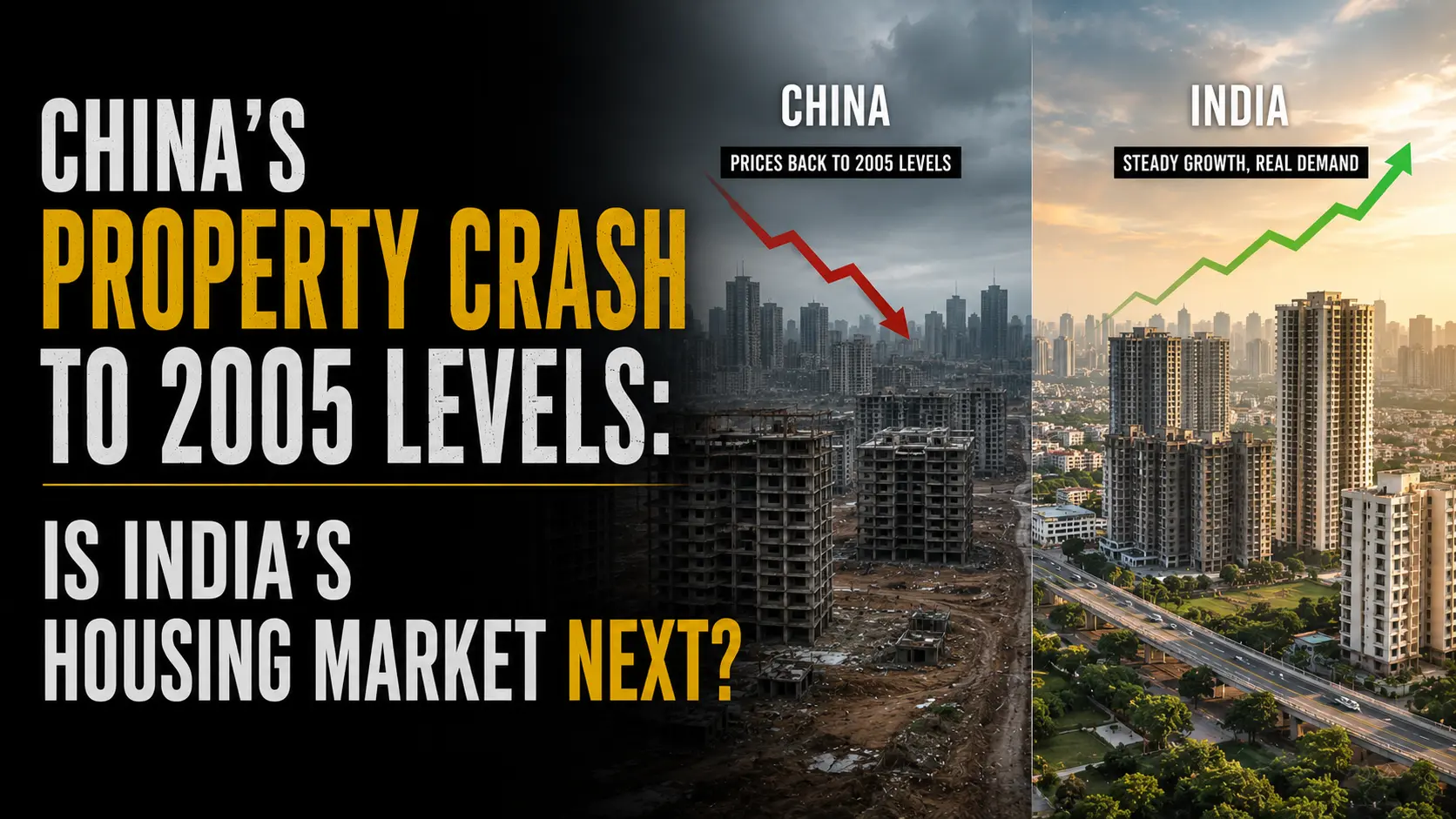
India's housing market in 2026 isn't broken — it's just increasingly out of reach for ordinary, middle-class Indians. Prices aren't crashing. Interest rates aren't dropping dramatically. Affordable homes aren't appearing in large numbers. Instead, the market is slowly splitting into two — one for wealthy Indians and NRIs with cash, another for renters with steady jobs who've given up on ownership.
The surprises that could change this? Interest rate cuts, genuinely funded affordable housing programs, and tax incentives that make a real difference. None of these are guaranteed. But all of them are possible in the next 6-12 months.
If you're thinking about buying — stop thinking and start acting. Get your finances ready now. Get pre-approved. Start hunting. Because waiting for prices to fall is a strategy that almost never works in India's property market. What will you actually do first — check your credit score, meet a bank, or start house hunting?