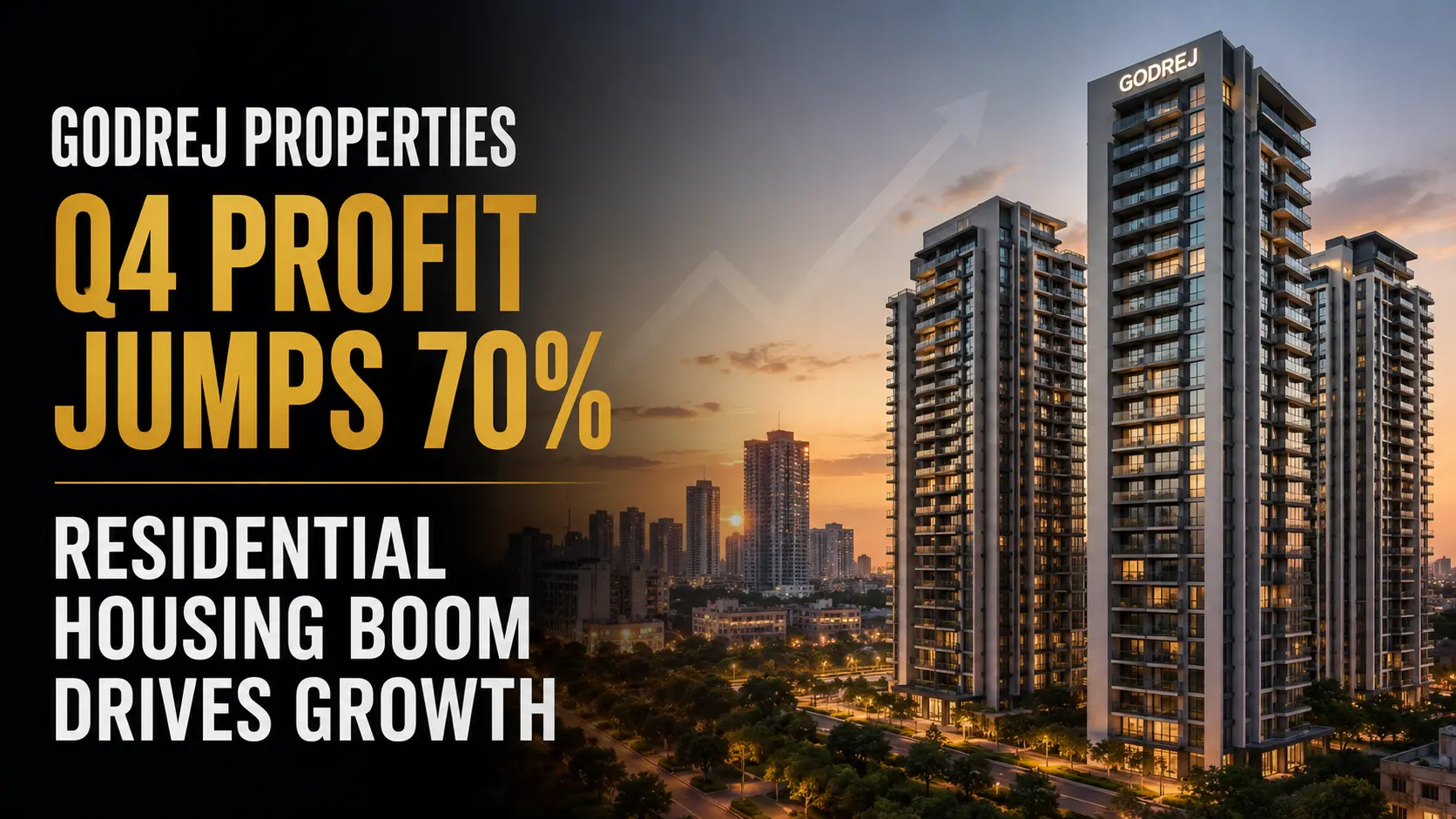
Godrej Properties, one of India's largest listed residential real estate developers, reported a stunning 70% surge in fourth-quarter profit as housing demand across major metropolitan areas remains at an all-time high. The company's net profit climbed to 6.5 billion Indian rupees ($68.46 million) for the quarter ended March 31, a significant jump from 3.82 billion rupees in the corresponding period last year, signalling robust market momentum in the residential sector even as economic headwinds persist globally.
Why India's Housing Boom Matters for Your Investment Decisions
India's residential real estate market has undergone a dramatic transformation over the past five years. No longer confined to wealthy urban professionals, homeownership aspirations have spread across middle-class households in tier-2 and tier-3 cities. The combination of improved home loan accessibility, historically low interest rates until recently, and massive infrastructure spending by the government has created a perfect storm of demand that developers like Godrej Properties are capitalizing on.
For individual Indians, this means two critical takeaways: first, if you're considering a property purchase, demand remains strong but prices are likely to stabilize as supply catches up; second, if you're already a homeowner, your asset value has probably appreciated more than you expected. The sustained demand reflects deeper structural changes—younger Indians earning better salaries, increasing urbanization, and changing family structures that favour separate households rather than joint living arrangements.
What Godrej Properties Achieved This Quarter—Breaking Down the Numbers
Godrej Properties' financial performance tells a compelling story about where Indian real estate stands today. Beyond the headline 70% profit rise, the company achieved impressive growth across multiple metrics. The company benefits from its strategic positioning in four of India's most attractive real estate markets: the Mumbai Metropolitan Region, Pune, Bengaluru, and the National Capital Region. Each of these markets has distinct growth drivers, from IT job creation in Bangalore to financial sector expansion in Mumbai.
The profit growth reflects not just volume increases but also better margins. Developers who can deliver projects on time and with quality command premium pricing in today's competitive environment. Godrej Properties has consistently ranked among the top performers in delivery timelines and customer satisfaction, which translates directly to brand value and pricing power.
Here's what drove this quarter's exceptional results:
- Net profit jumped 70% year-on-year to ₹6.5 billion, significantly outpacing sector averages and analyst expectations
- Strong sales momentum in Mumbai Metropolitan Region and Pune, where premium residential projects commanded higher price points
- Completion and handover of multiple projects boosted revenue recognition and customer satisfaction metrics
- Operating leverage improved as the company scaled project delivery without proportional cost increases
- Pre-sales and new project launches remained robust, indicating sustained buyer confidence and pipeline strength
- Cost management and operational efficiency gains contributed to margin expansion beyond revenue growth
What This Profit Surge Reveals About India's Real Estate Market
Godrej Properties' stellar performance is not an isolated event—it's a mirror reflecting the health of India's residential real estate sector more broadly. When a company this large reports such strong numbers, it signals that the underlying demand is genuine and not driven by speculation or artificial factors. The company's presence across four major metros provides a reliable barometer of national housing demand trends, and this quarter's results suggest the market remains fundamentally sound.
The 70% profit jump also reveals something critical about developer margins: they're expanding because builders can now command higher selling prices while managing costs more efficiently. This wasn't always the case. For years following the 2008 financial crisis and the subsequent RERA (Real Estate Regulation and Development Act) implementation, developers operated on thin margins. Today's profitability surge suggests a rebalancing where responsible developers are finally being rewarded for delivering quality projects on schedule. For homebuyers, this is double-edged: while competition for quality projects remains fierce, there's less likelihood of project delays or cost overruns, which plagued the sector previously.
What Comes Next—Market Expectations and Your Outlook
Godrej Properties' strong quarter sets the tone for the entire residential real estate sector heading into the second half of fiscal 2026. Market analysts expect continued healthy growth, though perhaps at a more measured pace than this quarter's exceptional performance. Interest rate movements will be crucial—any significant reduction in home loan rates could trigger another surge in demand, while rate increases might cool buyer enthusiasm. Additionally, government policies around affordable housing and smart city development will create new opportunities for large developers who can navigate regulatory requirements efficiently.
For prospective homebuyers and investors, this is an important inflection point. The combination of strong developer balance sheets, improving execution timelines, and sustained demand creates a buyer-favorable environment compared to just two years ago. Projects are being completed on time, quality standards have improved, and there's less inventory overhang. If you've been sitting on the fence about buying property, the next 12-18 months present a reasonable window before demand potentially outpaces supply again and prices accelerate sharply.
Frequently Asked Questions
Why did Godrej Properties' profit jump 70% in this quarter?
Godrej Properties' profit surged 70% due to strong residential sales across Mumbai, Pune, Bengaluru, and NCR, successful project completions, improved operating margins, and sustained homebuyer demand. The company benefited from premium pricing in high-demand markets and cost efficiencies from scaled operations.
Is this a good time to buy a residential property in India?
Market conditions favour buyers currently. Strong developer profitability means projects are completed on schedule with quality standards maintained. Home loan availability remains reasonable, though interest rates are elevated. Compare this to 2-3 years ago when delays were common and demand exceeded supply dramatically.
Which Indian cities show the strongest residential housing demand?
Mumbai Metropolitan Region, Pune, Bengaluru, and the National Capital Region lead in housing demand. These metros attract migration due to job creation in finance, IT, and professional services. Godrej Properties' concentration in these four cities reflects where India's wealthiest and fastest-growing population segments are located.
How do interest rates affect residential property demand in India?
Rising home loan interest rates increase monthly EMI amounts, reducing affordable borrowing capacity for middle-class homebuyers. Even a 1% rate increase meaningfully impacts affordability. Conversely, rate cuts trigger demand surges as buyers rush to lock in cheaper financing before rates potentially rise again.
What does RERA mean for homebuyers in India?
The Real Estate Regulation and Development Act creates legal protections for buyers, mandates timely project completions, and requires developers to maintain escrow accounts. RERA has significantly reduced fraud and project delays since its 2016 implementation, making residential purchases safer.