Introduction
Cooking is an essential life skill that combines science, art, and culture. Whether you’re baking bread, boiling rice, or grilling meat, every dish you prepare uses one or more cooking methods.
Understanding different types of cooking methods helps you:
- Enhance flavor and texture
- Preserve nutrients
- Save time and energy
- Achieve consistent results
In this article, we’ll explore all types of cooking methods, their subcategories, advantages, and examples so you can master them in your own kitchen.
1️What Are Cooking Methods?
Cooking
methods are techniques used to prepare food using heat.
Heat can be transferred to food in different ways — through air, water,
steam, or oil — and this determines the texture, taste, and nutritional
quality.
These methods are generally grouped into three main categories:
- Dry Heat Cooking Methods
- Moist Heat Cooking Methods
- Combination Cooking Methods
2️Dry Heat Cooking Methods
Dry heat
cooking uses air, metal, or fat to transfer heat to food — without
direct water contact.
It’s best for creating crisp textures, browning, and deep flavors.
A. Baking
Cooking
with dry heat in an enclosed space (oven).
Examples: Bread, pastries, cookies, pizza.
Benefits: Even cooking, caramelization, versatile.
B. Roasting
Similar
to baking but at higher temperatures; often used for meats and vegetables.
Examples: Roast chicken, potatoes, turkey.
Benefits: Crispy outer layer, juicy inside.
C. Grilling
Cooking
food over direct heat from gas, charcoal, or electric flame.
Examples: Kebabs, burgers, paneer tikka.
Benefits: Smoky flavor, reduced fat, quick cooking.
D. Broiling
Cooking
with direct heat from above (usually in an oven).
Examples: Broiled fish, steaks.
Benefits: Fast method, enhances surface browning.
E. Sautéing
Cooking
small pieces quickly in a small amount of oil or butter.
Examples: Stir-fried vegetables, noodles.
Benefits: Preserves texture, short cooking time.
F. Pan-Frying
Cooking
in shallow oil at medium heat.
Examples: Cutlets, omelets, fritters.
Benefits: Crisp surface, golden brown color.
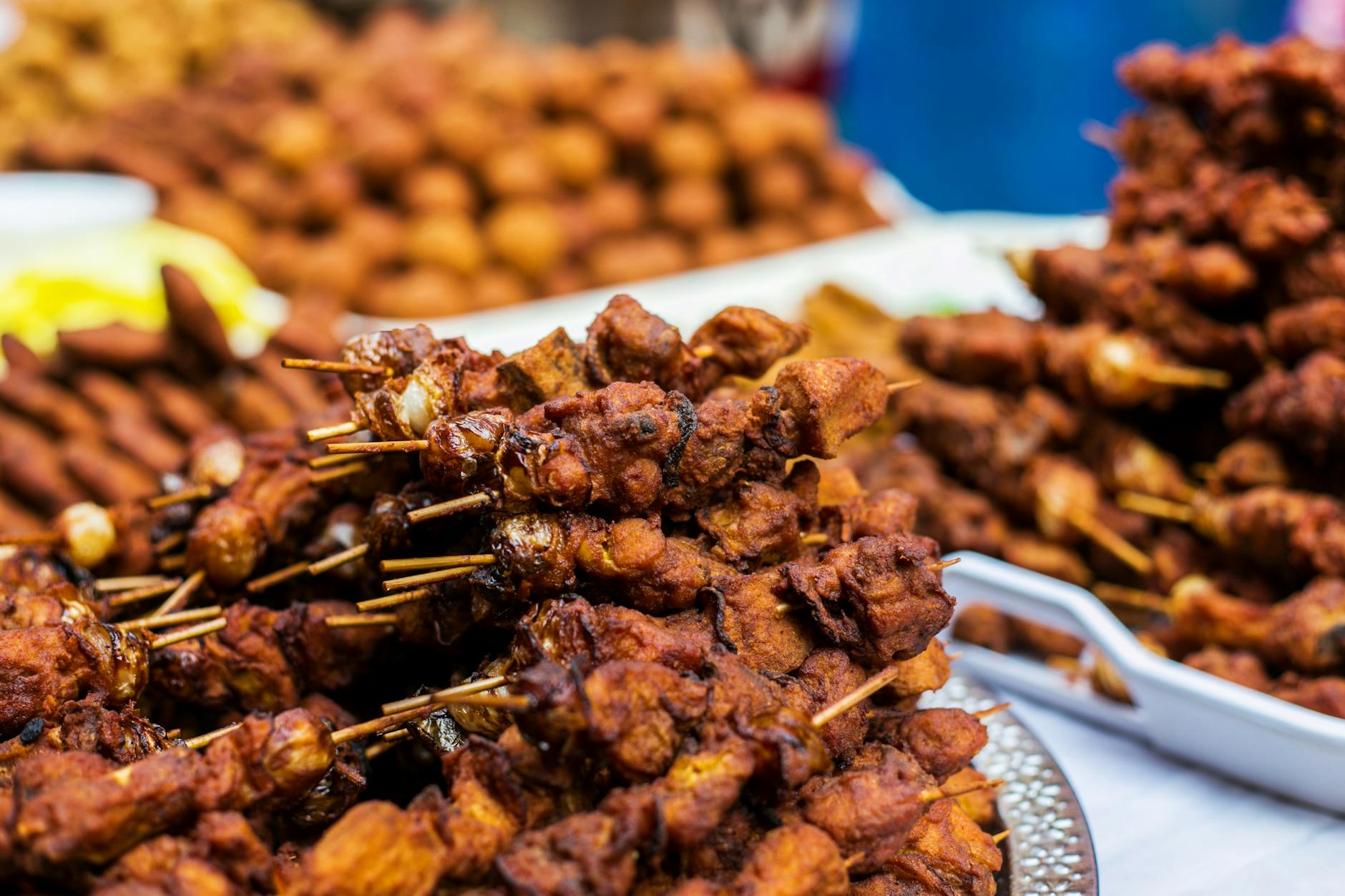
G. Deep-Frying
Fully
immersing food in hot oil.
Examples: French fries, samosas, pakoras.
Benefits: Fast cooking, crunchy exterior.

Pros of Dry Heat Cooking
- Produces appealing textures and flavors.
- Requires minimal water (flavor concentration).
- Retains most minerals.
Cons
- Risk of drying or burning food.
- May add extra fat (especially when frying)
3️Moist Heat Cooking Methods
Moist
heat cooking uses water, stock, broth, or steam to transfer heat.
It’s gentle and ideal for tenderizing food and preserving nutrients.
A. Boiling
Cooking
food completely submerged in hot water (100 °C).
Examples: Pasta, eggs, rice.
Benefits: Simple and fast.
Note: Overboiling can cause nutrient loss.
B. Simmering
Cooking
just below boiling temperature for a longer time.
Examples: Soups, curries, stews.
Benefits: Deep flavor, soft texture.
C. Poaching
Gentle
cooking at low temperature (70–80 °C).
Examples: Poached eggs, fish fillets.
Benefits: Retains delicate structure and nutrients.
D. Steaming
Cooking
using vaporized water without direct contact.
Examples: Idlis, dumplings, vegetables.
Benefits: Retains vitamins, bright color, no oil.
E. Blanching
Briefly
boiling food then cooling it in ice water.
Examples: Spinach, beans, tomatoes (for peeling).
Benefits: Preserves color, flavor, and texture.
Pros of Moist Heat Cooking
- Healthy and oil-free.
- Keeps food moist.
- Ideal for delicate ingredients.
Cons
- Can dilute flavor if water is discarded.
- Overcooking leads to mushy texture.
4️Combination Cooking Methods
Combination
cooking uses both dry and moist heat.
Typically, the food is seared first (dry heat) and then cooked slowly in liquid
(moist heat).
A. Braising
Searing
the food and then simmering it in a small amount of liquid.
Examples: Braised lamb, cabbage rolls.
Benefits: Deep flavor, tender results.
B. Stewing
Similar
to braising, but the food is completely covered with liquid.
Examples: Vegetable stew, chicken curry.
Benefits: Thick, rich sauce; nutrients retained in liquid.
C. Sous-Vide
Cooking
food sealed in a vacuum bag in precisely controlled water.
Examples: Chicken breast, salmon fillets.
Benefits: Perfect texture, nutrient preservation.
5️Other Specialized Cooking Techniques
Modern and regional cuisines have introduced additional methods:
|
Method |
Description |
Example |
|
Smoking |
Cooking and flavoring food with smoke |
Smoked salmon |
|
Toasting |
Browning food with dry heat |
Toasted bread, nuts |
|
Pressure Cooking |
Using steam pressure for quick cooking |
Lentils, rice |
|
Microwaving |
Electromagnetic heat cooking |
Reheating, popcorn |
|
Air Frying |
Circulating hot air for crisp results |
Fries, wings |
6️Summary Table of Cooking Methods
|
Category |
Methods |
Examples |
Main Benefit |
|
Dry Heat |
Baking, Roasting, Grilling, Broiling, Sautéing, Frying |
Bread, meat, kebabs |
Flavor and texture |
|
Moist Heat |
Boiling, Steaming, Poaching, Simmering, Blanching |
Soups, veggies |
Retains moisture |
|
Combination |
Braising, Stewing, Sous-Vide |
Curries, stews |
Tender and rich flavor |
7️Nutritional Impact of Different Cooking Methods
Each cooking method changes food composition differently.
|
Method |
Effect on Nutrients |
Health Tip |
|
Steaming |
Retains vitamins and minerals |
Best for vegetables |
|
Boiling |
May lose nutrients in water |
Use broth for soups |
|
Frying |
Adds fat, increases calories |
Use healthy oils |
|
Grilling |
Preserves nutrients but avoid burning |
Marinate meats |
|
Baking |
Even cooking without oil |
Great for bread and cakes |
|
Braising/Stewing |
Nutrients stay in liquid |
Consume sauce |
8️Global Uses of Cooking Methods
Each region uses specific techniques reflecting its culture and ingredients:
- India: Deep-frying (pakoras), sautéing (tadka), and stewing (curries).
- Japan: Steaming (dumplings), grilling (yakitori), simmering (ramen broth).
- China: Stir-frying, deep-frying, and steaming.
- Europe: Roasting, baking, braising.
- Middle East: Grilling, stewing, and roasting meats.
These variations show how universal principles of heat and moisture can be adapted to create thousands of unique dishes.
9️Healthy Cooking Practices
- Prefer steaming, grilling, or baking instead of deep-frying.
- Use minimal oil and avoid reusing it.
- Control temperature to prevent nutrient loss.
- Cook vegetables lightly to retain crunch and vitamins.
- Store cooked food properly to avoid spoilage.
🔟 Common Mistakes to Avoid
- Overheating oil before frying — leads to burnt food.
- Overcrowding the pan — causes uneven cooking.
- Not preheating ovens — uneven texture.
- Overboiling vegetables — destroys vitamins.
- Ignoring rest time — especially for grilled meats.
🧠 Expert Tip: Combine Methods for Perfect Results
Many dishes use two or more methods:
- Example 1: Sear chicken (dry heat) → simmer in curry (moist heat).
- Example 2: Bake pasta → finish under broiler for crisp top.
This hybrid approach enhances both flavor and tenderness.
💬 FAQs
Q1. What
are the 3 main types of cooking methods?
Dry heat, moist heat, and combination cooking.
Q2. What
is the healthiest cooking method?
Steaming and grilling are healthiest as they use less oil and preserve
nutrients.
Q3. What
is the difference between roasting and baking?
Roasting uses higher heat for meats/vegetables, while baking is for dough and
batters.
Q4. Can
air frying replace deep frying?
Yes, it mimics frying with up to 80% less oil using circulating hot air.
Q5. Why
is understanding cooking methods important?
It helps improve food texture, taste, and nutritional value while reducing
waste.
Conclusion
Cooking
is more than a daily routine — it’s a creative science that defines the
character of every cuisine.
By mastering the types of cooking methods, you can enhance flavor,
control nutrition, and confidently experiment in the kitchen.
From gentle steaming to sizzling grilling, every
method has a purpose.
The secret is to choose the right technique for each ingredient — and
enjoy the process of transforming simple food into something extraordinary.