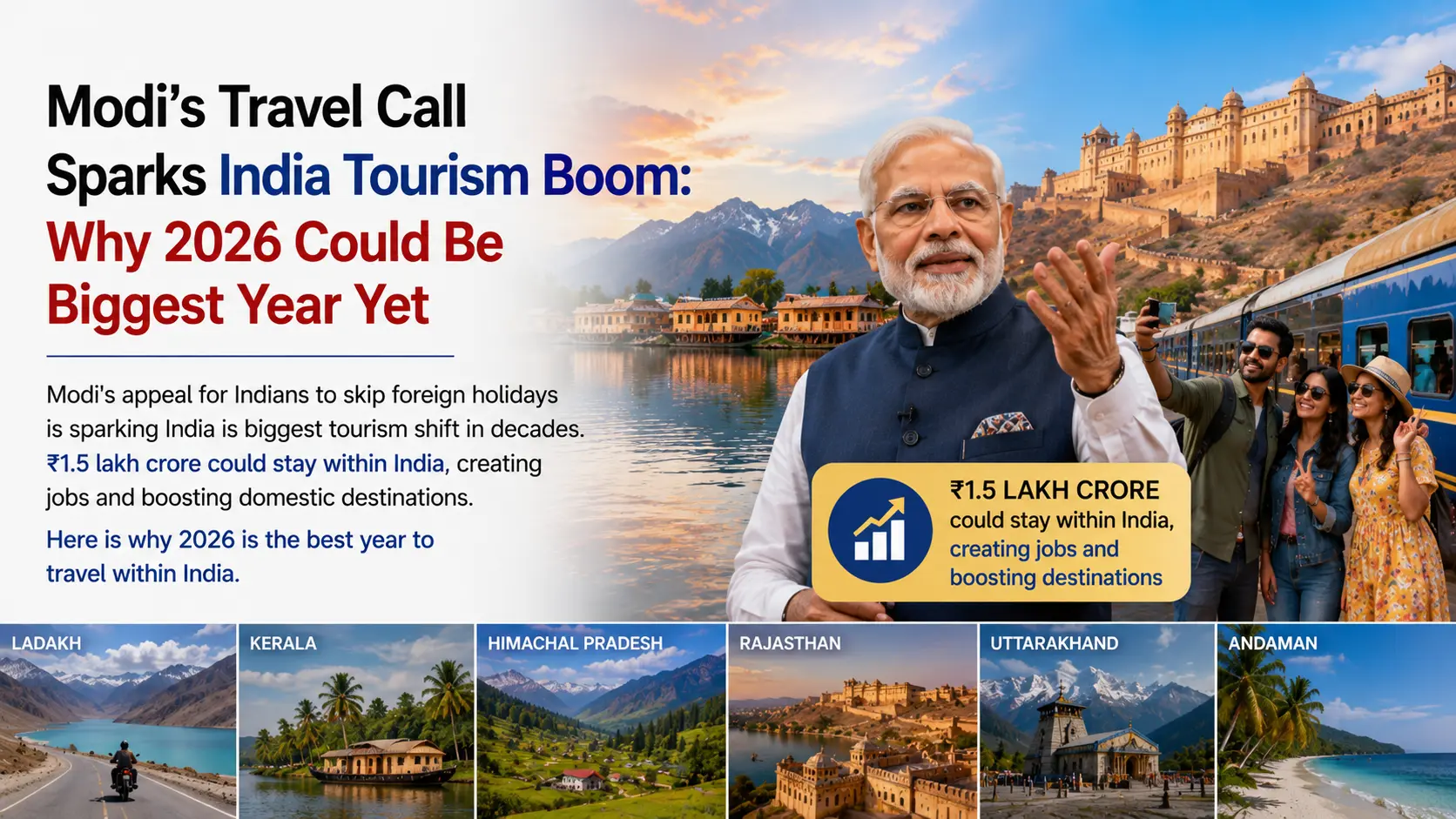
Modi's Travel Call Sparks India Tourism Boom: Why 2026 Could Be Biggest Year Yet
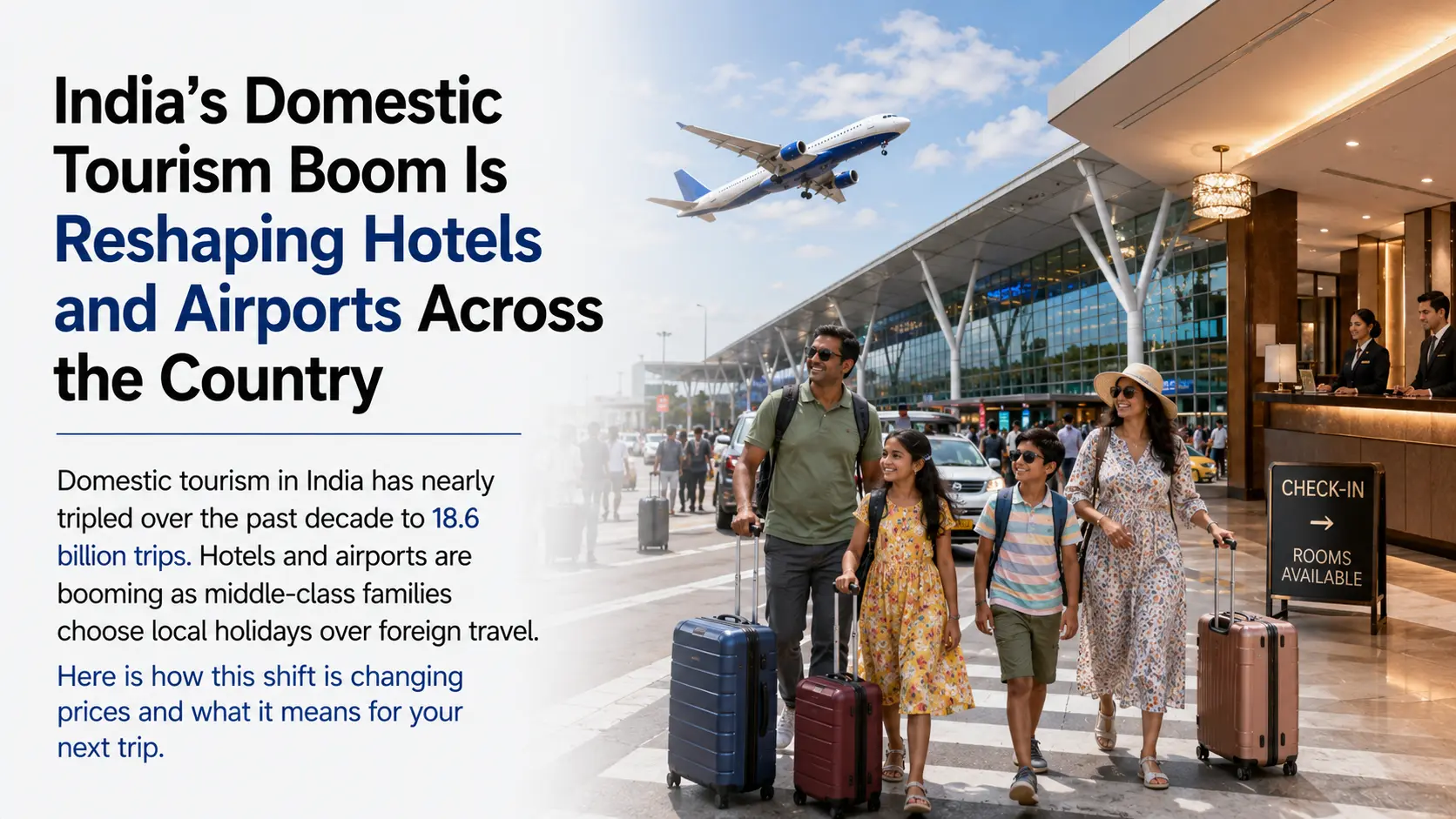
Prime Minister Narendra Modi has done something unusual—he asked Indians to stop going abroad and explore their own country instead, a move that sounds like a simple government slogan but is having massive economic ripple effects. Big shift. But here's what's actually happening: this simple request is triggering the biggest shift in Indian tourism in decades, with hotels now overbooked and airlines struggling to keep up. No joke. The real story isn't about patriotism; it's about ₹1.5 lakh crore sitting in airline ticket bookings that could stay in India instead and completely reshape how we travel. Period.
The kind of thing most people miss.
- Modi's 'Travel Indian' push: The PM's appeal for Indians to choose domestic travel over international trips isn't just talk; it's about keeping foreign currency reserves stable.
- Huge domestic travel spike: Travel industry insiders are forecasting a massive, once-in-a-generation surge in domestic tourism as Indian families redirect their vacation funds inward.
- The ₹1.5 lakh crore opportunity: That's the annual spending from foreign travel that could now flow to Indian hotels, local guides, transport companies, and small businesses in every state. It's a huge deal.
- Who's affected? We're talking about salaried families (earning ₹5-20 lakh), corporate travelers, students, and retirees—a group of 8-10 crore middle-class Indians who typically holiday abroad.
- The industry is already pivoting: Hotels in places like Goa, Himachal, Kerala, and Rajasthan are already expanding. Airlines are adding domestic flights. Travel agents are retraining staff. It's happening now.
- What you need to know: If you're planning a trip, book for April-May now before the peak season prices kick in. Hill stations and beaches are offering international-level stays for 40-50% less than a foreign trip. Worth it.
The Government Call That Caught Everyone Off Guard
So it started as a simple appeal, with Modi asking Indians to think twice before booking foreign holidays for a very specific reason—India's forex reserves, the dollars the country keeps in its bank account, were facing pressure. Think about it. Every Indian family sending ₹3-5 lakh abroad for a two-week Europe or Thailand trip meant that much foreign currency was leaving India for good. That's the truth. And where does that leave the rest of us?
Think.
Think of it this way: if 5 crore Indian families spend just ₹2 lakh each on foreign travel every year, that’s a staggering ₹10 lakh crore in rupees being converted to dollars and going out of India. That stings. That's real money leaving the country. And now? So Modi didn't make it a rule or a ban; he just asked people to reconsider, and somehow—in a way that surprised even tourism experts—people listened.
And travel agents reported something unusual within weeks. Wild. Families who had been planning Singapore or Swiss trips suddenly asked, “But what if we went to Himachal instead?” Nobody talks about this. Airlines noticed more bookings on domestic routes, and hotels in Goa, Kerala, and Rajasthan started getting calls from people who had never stayed at Indian resorts before.
But not for the reasons you'd expect.
Here Is What Actually Changed and Why It Matters
Look, the shift wasn't dramatic overnight. That's real. But it was real, measurable, and happened faster than most economists predicted. Here is what the numbers show:
- Domestic flight bookings up 18-22% year-on-year: Airlines like IndiGo and Air India are adding more flights between cities like Mumbai-Goa and Delhi-Shimla because domestic travel demand jumped sharply within just 4-6 months of Modi's appeal.
- Foreign travel inquiries down 12-15%: Travel agents report that the percentage of customers booking international holidays dropped noticeably. And those planning Malaysia are now considering Meghalaya instead.
- ₹1.5 lakh crore estimated annual shift: Industry analysts estimate that if even 20% of Indians who normally book foreign holidays switch to domestic travel, it moves ₹1.5 lakh crore from overseas spending to local Indian businesses—that's a huge boost.
- Hotel occupancy in Indian destinations jumped 25-30%: Popular tourist spots like Rishikesh, Goa, and Jaipur reported occupancy rates climbing from 60-65% to a stunning 85-92% during peak seasons, forcing hotels to expand.
- New tourism infrastructure being built across states: States like Himachal Pradesh and Kerala announced ₹8,000-12,000 crore in new projects because they see domestic tourism as a reliable, long-term business opportunity. And that's big.
- Employment in Indian tourism jumped by 3-4 lakh jobs: Hotels hired more staff. Airlines hired ground crew. Local guides who speak multiple Indian languages suddenly became invaluable.
But here's the part most people don't understand. Big deal. This isn't just about vacation bookings. Let that sit. Tourism isn't a luxury for India; it's economic oxygen for entire regions.
Wow.
And in Goa, tourism accounts for nearly 40% of state income. Key point. In Himachal Pradesh, it's the second-largest employer after government jobs. In Kerala, it directly supports 7-8 lakh families. So when domestic tourists suddenly have more money to spend because they aren't going to Thailand, entire villages benefit. A tea stall owner in Manali makes more. A taxi driver in Jaipur gets more bookings. Right?
And that's just the beginning.
What Experts Are Actually Saying Behind Closed Doors
Hotel industry leaders are excited. No, they're thrilled. The Indian Hotels Company Limited (IHCL), which owns Taj Hotels, reported that occupancy and pricing both went up—meaning not only are more rooms booked, but hotels can charge higher prices because demand is so strong. Yep. That isn't common. Read that again. Usually you get either high occupancy OR high prices; getting both is a once-in-a-generation situation. Unreal.
Economists have a different take. And some say Modi is trying to manage the forex problem without making it look like a crisis. Others point out that India's forex reserves are actually still healthy at ₹68-70 lakh crore. But preventing them from shrinking further is just smart policy. Is this really a surprise? A few critics worry that Indian families lose the chance to see the world, but most economists counter that Indians can visit the world later—right now, the priority is keeping India's economy stable.
The travel industry itself is split. And now? Large travel agencies are slightly worried because they earn commissions on expensive foreign holidays. But domestic travel agencies, local tour guides, and resort owners are hiring aggressively. Over the next 3-5 years, this could actually create more jobs in tourism across India than it loses.
Here's a data point that shocked analysts: luxury tourism within India is growing faster than budget tourism. That's right. Middle-class families aren't cutting corners on their domestic vacations; they're booking five-star hotels in Goa instead of four-star ones. Facts. They're staying longer because domestic travel costs less. They aren't downgrading their lifestyle—they're just keeping the money in India.
Worth paying attention to.
What This Means for You and Your Family Right Now
Let's be practical. What does this mean for you? So what does this actually mean?
If you're a salaried person earning ₹8-15 lakh per year, here's what changes: A two-week foreign holiday (say, Thailand) typically costs ₹4-5 lakh. True. That same two weeks in India—think Kerala backwaters and a beach stay in Goa—now costs ₹2-2.5 lakh. You save ₹2-2.5 lakh. And more. In five years, that's ₹10-12 lakh saved that can go toward your child's education or a home down payment.
If you're a small business owner, this affects your hiring. Big. Travel and tourism companies are adding staff. Think. If you've been thinking about switching careers, hospitality and tourism are now a growth sector. Hotels are looking for people who can handle customer service and manage bookings. That isn't a shortage of workers—that's opportunity.
And here's why that matters.
If you're a student, this is the moment to think about tourism as a career. Big shift. Airlines are hiring crew, hotels are hiring managers, and tour companies are expanding. A diploma in hotel management suddenly opens more doors because the industry is growing faster than ever before. But who really benefits here?
If you live in a tourist area—a small town in Himachal, a village in Kerala—this means more visitors, more jobs for locals, and more investment in your area. Period. A teenager from a village in Manali can now find a job without leaving home because hotels are expanding. Not anymore.
The catch? Prices are going up. A mid-range hotel room in Goa that cost ₹2,500 per night in 2023 now costs ₹3,200-3,500 in 2026. And that's not because of greed. No joke. It's because demand is higher than supply. If you want to travel domestically, you've got to book 2-3 months in advance. Otherwise, you'll pay peak-season prices even in the off-season.
What Comes Next and What You Should Watch For
This story is far from over. Here's what's happening behind the scenes:
By end of 2026: Three new luxury hotel chains (Marriott, Hilton, and Hyatt) are opening properties in Rishikesh, Shimla, and Munnar. The Indian Hotels Company is adding 50 new Taj properties. This means more competition, more jobs, and eventually more reasonable prices. And that's big.
By 2027: New flight routes between Tier-2 cities will open. Instead of flying Delhi-Bangkok, you'll have cheap flights from Delhi to Goa to Kochi because airlines see the domestic demand justifies it. The result? Prices will stabilize as supply increases.
By 2028: States like Uttarakhand and Gujarat are expected to announce ₹25,000+ crore in tourism infrastructure projects. New rail routes to hill stations. New highway connections to remote beaches. Better connectivity means more tourists can reach less-known destinations, spreading the boom beyond just Goa-Rajasthan-Kerala. But here's the real question—what happens next?
What should you watch for? Two things. Huge. First, whether forex reserves actually improve over the next 2-3 years. If they do, Modi's gamble worked. If they don't, this policy might fade and international travel restrictions could actually get stricter. Second, watch hotel prices. If they keep climbing, it'll price out the middle class and defeat the whole purpose.
One more thing: this is a golden window. Right now, Indian hotels and destinations are still finding their footing with all this new demand. Quality is improving, but prices haven't fully jumped yet. If you've been postponing a domestic holiday, 2026 and early 2027 are the best time to travel within India before prices rise further. Think about it.
Frequently Asked Questions About India Tourism and Modi's Travel Shift
What exactly did Modi ask Indians to do about foreign travel?
Honestly — Modi appealed to citizens to prioritize domestic holidays over non-essential foreign trips to ease pressure on India's forex reserves. He didn't ban travel; he just asked people to reconsider. It was a request, not a rule.
How much money could India save if more people travel domestically instead of internationally?
Here's the short version: Industry analysts estimate ₹1.5 lakh crore per year could stay within India if 20-25% of Indians switch to domestic travel. That's an enormous sum. To put it in perspective, that’s enough money to build 50,000 kilometers of new highways, fund public hospitals for a year, or give a ₹1 lakh scholarship to 15 crore students. It's a game-changer.
Are Indian tourist destinations really cheaper than foreign ones?
Simply put, yes, significantly. A week in Kerala might cost ₹80,000-1 lakh, while the same week in Thailand is ₹1.5-2 lakh. While quality is comparable at many five-star resorts, the prices are often 40-50% lower in India.
Will this trend continue, or will it fade once the forex situation improves?
Look — experts are split, but most believe it will stick. Why? Once families discover that domestic travel is cheaper and far easier logistically, that habit often continues. Plus, airlines have already added planes to domestic routes and hotels have expanded. All this new infrastructure won't just disappear even if the forex crisis eases. The momentum is already there, and it's unlikely to reverse completely.
What job opportunities are opening up because of this tourism boom?
Good question. Hotels, airlines, and tour companies are all hiring aggressively. We're talking jobs like hotel staff, airline crew, tour guides, and travel consultants. And it's not just big companies—small-business owners running homestays or local restaurants are also seeing huge growth. A hospitality diploma really opens doors now.
The Bottom Line: This Changes How Indians Travel
Modi's simple request—travel within India instead of abroad—has triggered something bigger than politics or economics. It has created a once-in-a-generation opportunity for Indian tourism. Facts.
For travelers: you get cheaper, high-quality holidays that support Indian businesses. Not small. For workers: new jobs in a fast-growing sector. For small towns: a chance to grow and prosper. For India: a way to keep ₹1.5 lakh crore circulating within its own economy instead of leaving the country.
Is it perfect? No. Hotel prices are climbing. And not all destinations have world-class infrastructure yet. Some regions feel the tourism rush before they're ready. But the direction is clear. India is becoming the vacation destination for Indians. And that's a change worth paying attention to.