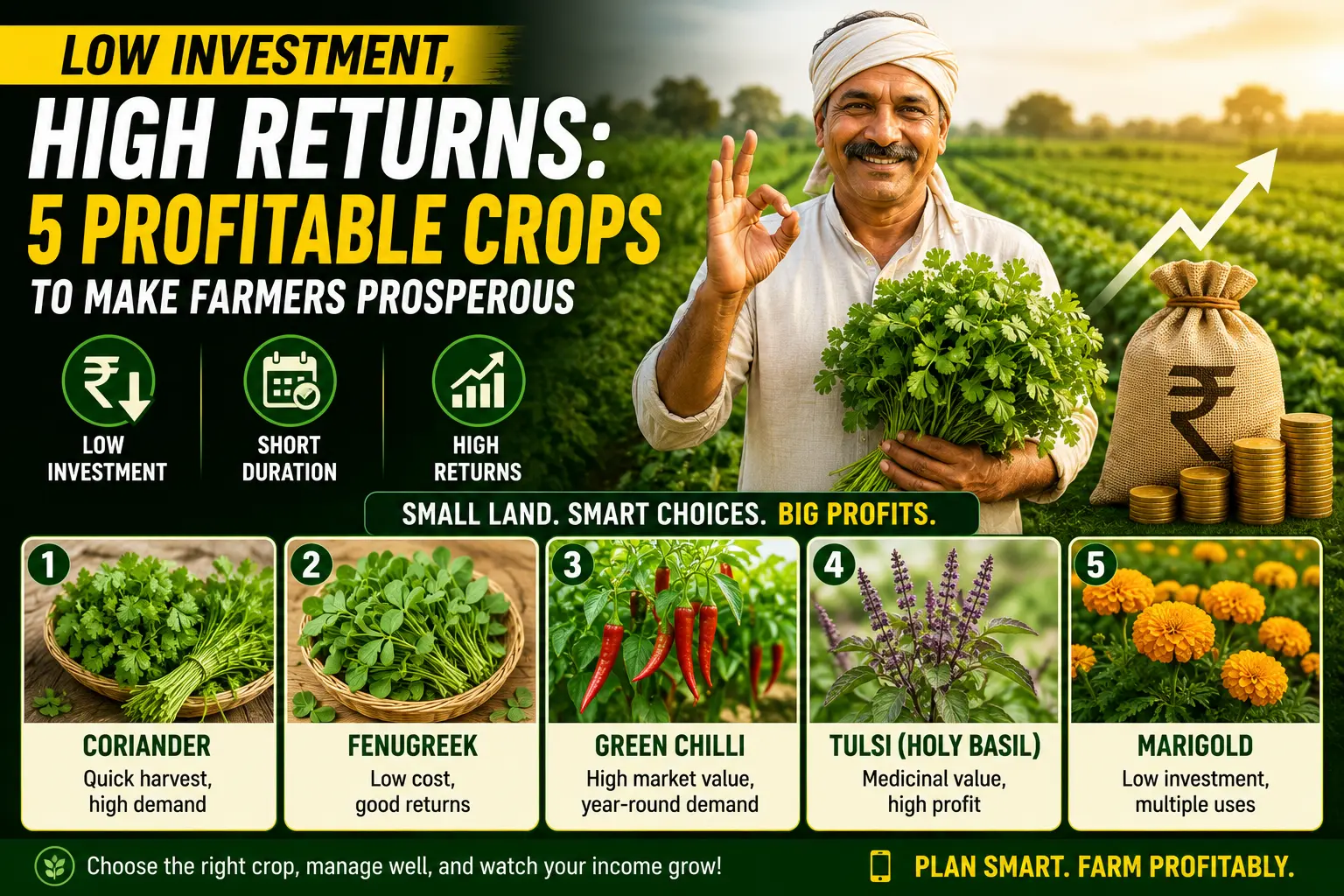
The Shift to Smart Farming: How Low-Investment Crops are Turning Farmers into Entrepreneurs
Agriculture in India is undergoing a massive transformation. For decades, traditional crops like paddy and cotton dominated the fields. However, rising input costs, unpredictable weather, and fluctuating market prices have made these crops a risky bet for small and medium-scale farmers. Today, the focus is shifting toward "Smart Farming"—choosing crops that require less water, less time, and most importantly, very low investment, while offering high returns.
Agricultural experts suggest that instead of sticking to a single traditional crop, farmers should diversify into leafy greens, flowers, and medicinal plants. These crops not only reduce the risk of total loss but also ensure a steady flow of cash throughout the year. Here is an in-depth look at five crops that are currently reigning the market.
1. Coriander: The Quick Cash Crop
Coriander is perhaps the most essential ingredient in every Indian kitchen. Whether it’s a roadside dhaba or a five-star hotel, the demand for fresh coriander is perennial. For a farmer, the best part is the turnaround time. Coriander is ready for harvest within just 30 to 45 days of sowing.
Because it can be grown in small patches of land or even as an intercrop between larger fruit trees, the investment in seeds and labor is minimal. The key to making a fortune here is timing. While prices are steady throughout the year, they skyrocket during the summer months when production is low. Direct sales to local supermarkets and hotels can eliminate middlemen, ensuring the farmer keeps the entire profit.
2. Fenugreek (Methi): The Healthy Choice
With increasing health awareness, the demand for fenugreek—both as a leafy vegetable and as seeds—has seen a significant jump. It is a hardy crop that requires very little water and is naturally resistant to many common pests. This makes it a favorite for those wanting to try organic or natural farming.
Fenugreek is usually ready to be picked in about 30 days. Beyond local markets, there is a growing niche for "organic methi" in e-commerce platforms and organic specialty stores. Farmers can earn a premium by branding their produce as chemical-free.
3. Tulsi: The Medicinal Goldmine
If you are looking for a crop that requires almost zero maintenance, Tulsi (Holy Basil) is the answer. Unlike food crops, Tulsi isn't easily affected by weather changes or stray animals. Once planted, the leaves can be harvested multiple times over several months.
The real profit in Tulsi lies in the Ayurvedic and pharmaceutical industries. Many companies look for contract farming arrangements where they buy the dried leaves or seeds directly from the farmer. This provides a guaranteed income and protects the farmer from market volatility. As the world moves toward herbal wellness, the outlook for Tulsi remains incredibly bright.
4. Marigold: The Flower of Every Celebration
Flowers are the heartbeat of Indian culture. From daily temple rituals to grand weddings and festivals like Dussehra and Diwali, marigolds are always in demand. The cultivation of marigolds is relatively simple and the crop starts yielding flowers within 60 days.
The unique advantage of marigold farming is the "weekly income" model. Flowers can be harvested every few days, providing the farmer with a regular cash flow to manage household expenses. During the peak wedding season, the price of a single kilogram of marigolds can triple, making it one of the most profitable seasonal crops.
5. Chili: The Commercial King
Chili is a crop that caters to both domestic and international markets. While the initial investment in saplings and fertilizers might be slightly higher than leafy greens, the returns are substantial. Farmers have the flexibility to sell green chilies for immediate cash or dry them to sell as red chilies when market prices are higher.
India is one of the largest exporters of chilies in the world. By connecting with spice processing companies or exporters, a farmer can secure high-value deals. With the right pest management and irrigation, a chili field can produce yields for several months.
Expert Advice: How to Maximize Profits?
পప
پ Choosing the right crop is only half the battle. To truly become a "King Farmer," one must focus on two things: Integrated Management and Direct Marketing.
Integrated Pest Management: Don't wait for pests to attack. Use traditional and organic preventive measures to keep the plants healthy. This reduces the cost of expensive chemical pesticides.
Direct-to-Consumer Marketing: In the digital age, farmers can use WhatsApp and social media to connect directly with residential societies or local restaurant owners. Selling directly ensures a 20-30% higher profit margin compared to selling in traditional wholesale markets (Mandis).
The Future Outlook
The future of agriculture lies in diversification. Small farmers can no longer depend on a single annual harvest. By integrating short-term crops like coriander and marigold with long-term commercial crops like chili, farmers can create a sustainable income model. As the demand for fresh, local, and medicinal produce grows in urban areas, the "Low Investment-High Profit" model is the most viable path to making farming a truly profitable profession once again.