Delhi’s Aggressive Flu Season: H1N1 Cases Jump Six-Fold; Why You Must Not Ignore That "Mild Cold"
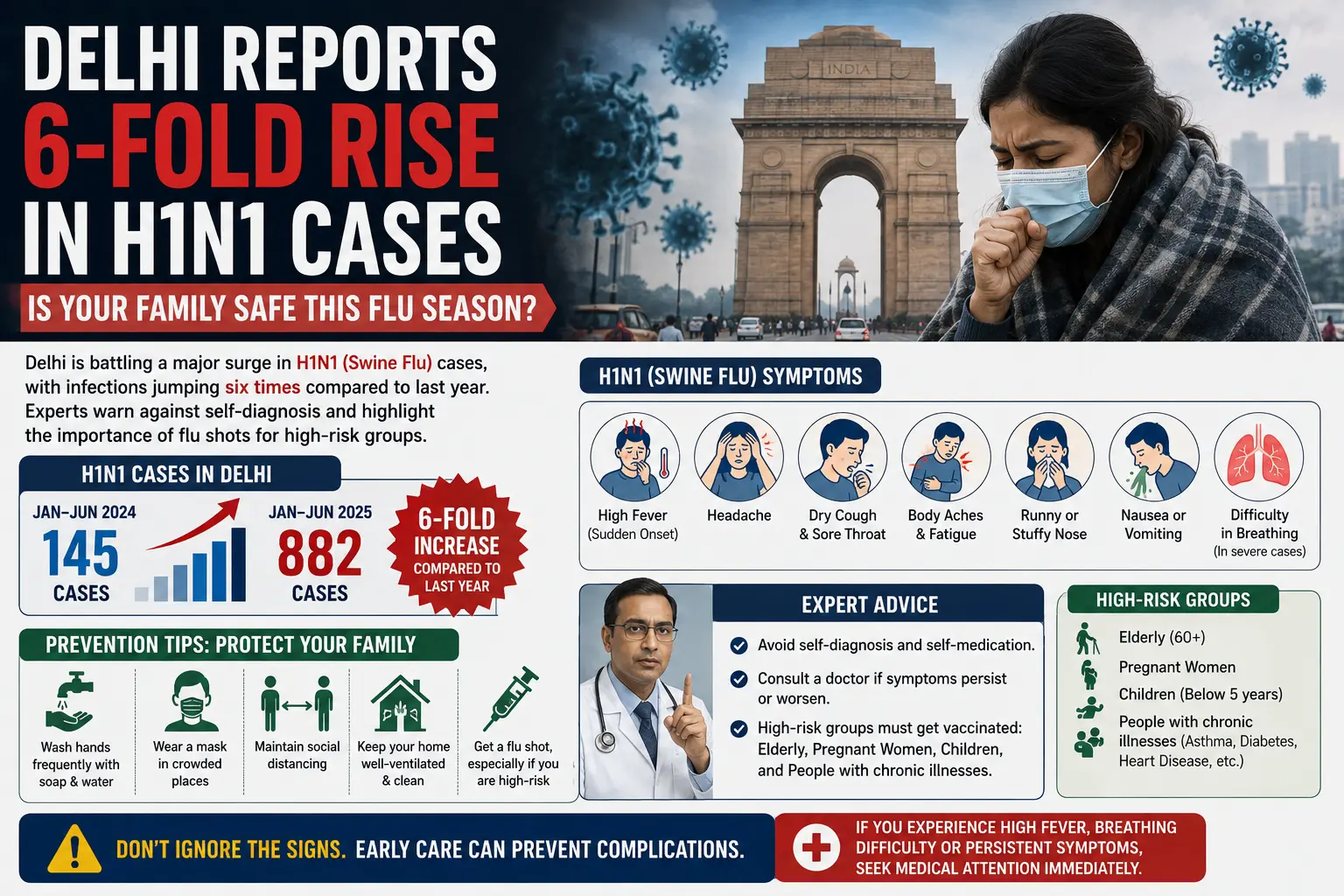
The national capital is currently in the grip of a significant health challenge as H1N1 influenza, commonly known as Swine Flu, spreads rapidly across Delhi and the National Capital Region (NCR). According to the latest health reports, the city has logged over 1,340 cases of H1N1 this monsoon season—a startling increase from the 229 cases recorded during the same period last year. This nearly six-fold spike is more than just a statistic; it is a clear warning that the influenza virus is circulating with high intensity. While the news that no fatalities have been reported so far brings some relief, doctors are urging residents not to become complacent.
Not "Just Another Flu"
A common mistake many people make is dismissing H1N1 as a routine seasonal illness. However, medical experts point out that this is a dangerous misconception. Dr. Arjun Khanna, Head of Pulmonology at Amrita Hospital, explains, "Influenza, including H1N1, has the potential to turn serious very quickly. It can lead to viral pneumonia, worsen existing conditions like asthma or COPD, and even put a severe strain on the heart."
For a healthy adult, the flu might pass in a few days with rest and hydration. But for a vulnerable person, the gap between a mild fever and a hospital bed can be very narrow. The virus targets the respiratory system, and in severe cases, it can lead to full respiratory failure. This is why understanding the nature of the virus is the first step toward safety.
Who is in the Danger Zone?
In a typical Indian household, multiple generations often live under one roof. This makes the spread of the virus particularly concerning for certain family members. According to health experts, the groups at highest risk for complications include the elderly, who often have weaker immune systems, and young children, whose bodies are still learning to fight off pathogens.
Pregnant women are also highly susceptible to severe viral effects and must take extra precautions. Additionally, chronic patients—people living with diabetes, heart disease, hypertension, or chronic kidney disease—are in the high-risk category. The same virus that causes a mere sniffle in a healthy teenager could leave a diabetic grandparent breathless. Protecting the vulnerable at home is a collective responsibility.
The Monsoon Connection
The timing of this outbreak is no coincidence. The monsoon season in Delhi brings damp weather and temperature swings—perfect conditions for the influenza virus to survive and spread. Droplets from a cough or sneeze stay in the air longer in humid conditions, and crowded indoor spaces like offices, schools, and malls act as hotspots for transmission.
The drop in temperature during the rains allows the virus to remain active for longer periods on surfaces like doorknobs, elevator buttons, and mobile phones. As people tend to gather indoors during the rain, the chances of close-contact transmission increase significantly.
Red Flags You Should Never Ignore
One of the biggest challenges this season is that H1N1 symptoms—fever, cough, sore throat, and body aches—overlap significantly with COVID-19, Dengue, and common viral fevers. Self-diagnosis is therefore unreliable and potentially dangerous. You should seek immediate medical attention if you experience a persistent high fever that does not settle with basic over-the-counter medication.
Difficulty in breathing or shortness of breath is a major red flag. Other warning signs include sudden chest pain or pressure, falling oxygen saturation levels (below 94%), and extreme dizziness or confusion. Early medical intervention is the key to preventing the virus from reaching the lungs and causing long-term damage.
The Antibiotic Trap
A frequent error in Indian households is the use of antibiotics for any kind of fever or cold. It is critical to understand that H1N1 is a virus, and antibiotics only kill bacteria. Using them unnecessarily does not cure the flu and contributes to the growing global problem of antibiotic resistance. When you use antibiotics for a virus, you are training the bacteria in your body to resist those drugs. Instead, doctors may prescribe specific antiviral medications like Oseltamivir if the case is severe or the patient is in a high-risk group.
The Shield of Vaccination
Prevention is the best strategy, and it is surprisingly low-tech. An annual influenza vaccination remains the most reliable shield. While it may not prevent every single infection, it significantly lowers the chances of hospitalization and severe complications. Doctors recommend taking the "flu shot" before or at the start of the monsoon season.
Alongside vaccination, basic hygiene still does the heavy lifting. Frequent hand-washing with soap, covering your mouth when sneezing, and avoiding close contact with people who are sick are essential steps. Disinfecting shared surfaces and ensuring good ventilation in indoor spaces can also help limit the spread.
Conclusion: A Time for Vigilance
The rise in H1N1 cases in Delhi is a reminder that influenza continues to pose a serious public health challenge. "This is not the time for complacency," says Dr. Khanna. Awareness, early recognition of symptoms, and timely medical care can make a critical difference. As cases climb across the NCR, understanding the risks and taking preventive steps will help protect both individuals and the wider community during this active flu season. Stay safe, stay informed, and do not ignore the warning signs.