Diplomatic Outrage: Indian Embassy Walls Defaced in Slovenia; New Delhi Calls for Immediate Action Against Anti-India Groups
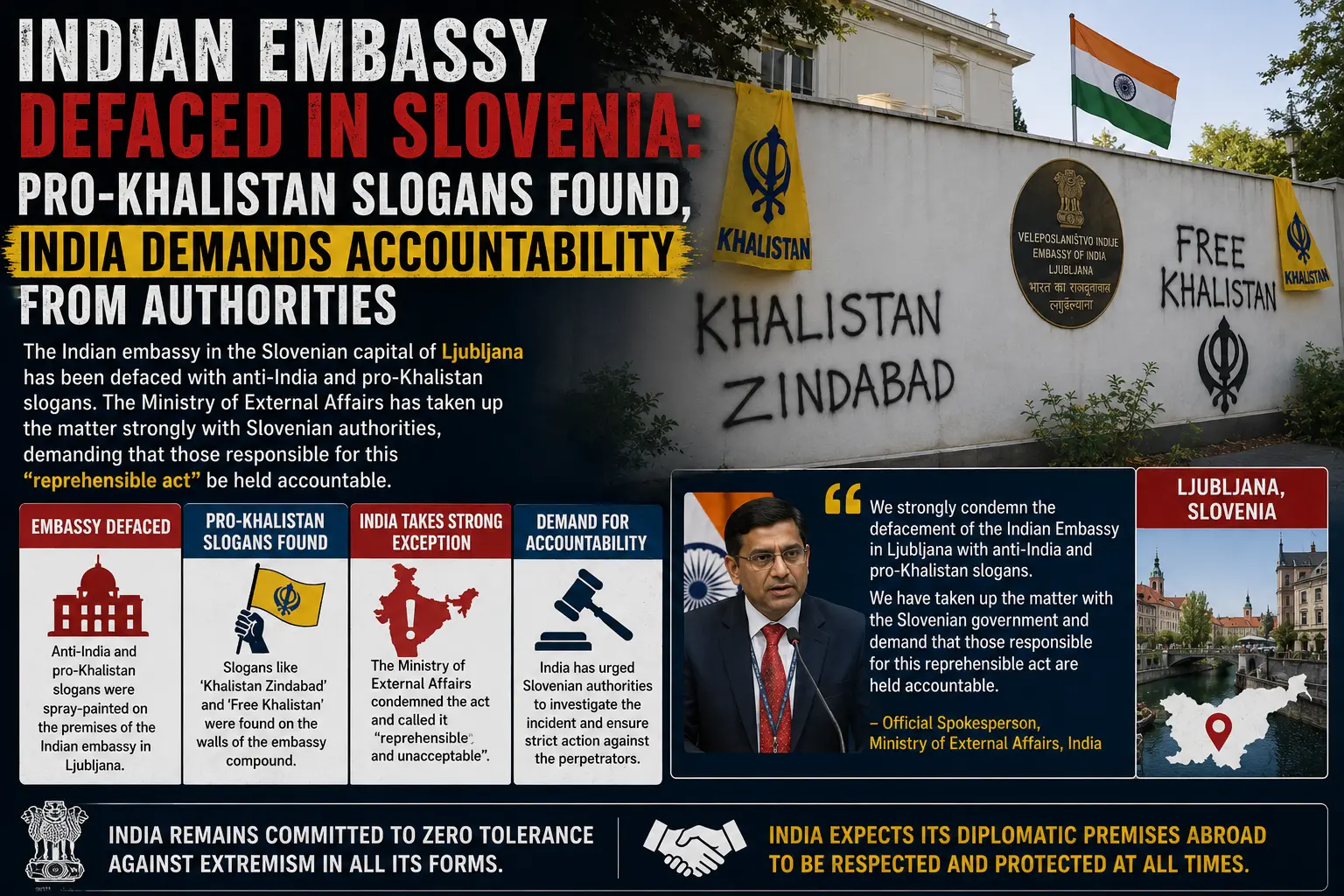
In a disturbing incident that has sparked diplomatic tension, the Indian Embassy in Ljubljana, Slovenia, was targeted by vandals on Monday. According to reports confirmed by the Ministry of External Affairs (MEA), the premises were defaced with anti-India slogans, specifically linked to pro-Khalistan elements. This act of vandalism has drawn a sharp reaction from the Indian government, which is now demanding full accountability and better security for its diplomatic missions abroad.
What Happened in Ljubljana?
Ljubljana is the capital of Slovenia, a quiet European nation where diplomatic ties with India have generally been friendly. However, on August 10, the peaceful atmosphere was shattered when staff at the Indian Embassy discovered that the outer walls of the premises had been spray-painted with offensive graffiti. The slogans were pro-Khalistani in nature and directly targeted the Indian Prime Minister.
This type of "defacement" is not just a crime of property damage; in the world of international diplomacy, it is seen as a serious breach of security and a direct insult to the nation the embassy represents.
India’s Strong Diplomatic Protest
The MEA issued a stern statement condemning the act. MEA spokesperson Randhir Jaiswal stated that India has taken up the matter "strongly" with Slovenian authorities. The protest was registered at two levels: in New Delhi with the Slovenian embassy and in Ljubljana with the local government.
"We condemn the defacement of the premises of our Embassy in Ljubljana, Slovenia, by anti-India elements," the MEA stated. India has made it clear that it expects the Slovenian police to conduct a thorough investigation, identify the perpetrators, and ensure they face legal consequences. The message from New Delhi is simple: such "reprehensible acts" cannot be ignored.
The Shield of the Vienna Convention
India’s protest is grounded in international law, specifically the Vienna Convention on Diplomatic Relations. This convention is a global agreement that dictates how countries must treat foreign diplomats and their offices. One of the core rules is that diplomatic premises are "inviolable." This means the host country (in this case, Slovenia) has a special duty to protect the embassy from any intrusion, damage, or disturbance of peace.
By allowing such vandalism to happen, there is a perceived lapse in the host nation's security protocols. India has urged Slovenia to uphold its international obligations and prevent such incidents from happening in the future.
The Pattern of Anti-India Attacks
While this is the first such high-profile incident in Slovenia, it follows a worrying pattern of attacks on Indian missions in Western countries. In recent years, Indian embassies and consulates in Canada, the United Kingdom, and the United States have faced similar threats.
In London, protesters tried to pull down the Indian flag at the High Commission.
In San Francisco, an attempt was made to set fire to the Indian consulate.
In Canada, several diplomatic buildings were defaced with similar slogans.
Indian officials believe these are coordinated efforts by small but loud extremist groups to spread "hateful propaganda and disinformation." India has called upon law enforcement agencies "elsewhere" (meaning all other countries) to take note of these groups and their illegal activities.
Impact on India-Slovenia Relations
The timing of this incident is particularly unfortunate because India and Slovenia have been working hard to improve their relationship. Just last month, the Indian Ambassador to Slovenia, Amit Narang, met with Slovenia’s Minister of Foreign and European Affairs, Tone Kajzer. They discussed increasing economic cooperation and cultural exchanges. In June, India was well-represented at Slovenia’s National Day celebrations.
While this incident is a setback, experts believe that a swift and strong response from the Slovenian police could help mend the situation. If the vandals are caught and punished, it will send a message that Slovenia does not support extremist activities on its soil.
Conclusion
The defacement of the Indian embassy in Slovenia is a reminder of the challenges India faces as its global influence grows. There are clearly elements that wish to tarnish India's image through cowardly acts of vandalism. However, the Indian government’s proactive and firm stance shows that it will not be intimidated.
For the international community, this serves as a wake-up call to protect diplomatic spaces. Security for embassies is not just about gates and cameras; it is about respecting the sovereignty of a nation. As the investigation in Ljubljana continues, India remains vigilant, ensuring that the voice of the nation is heard loud and clear on the global stage.