The Reparations Game: Why Trump is Asking Iran for 50 Years of Back-Payments Amidst the 2026 Conflict
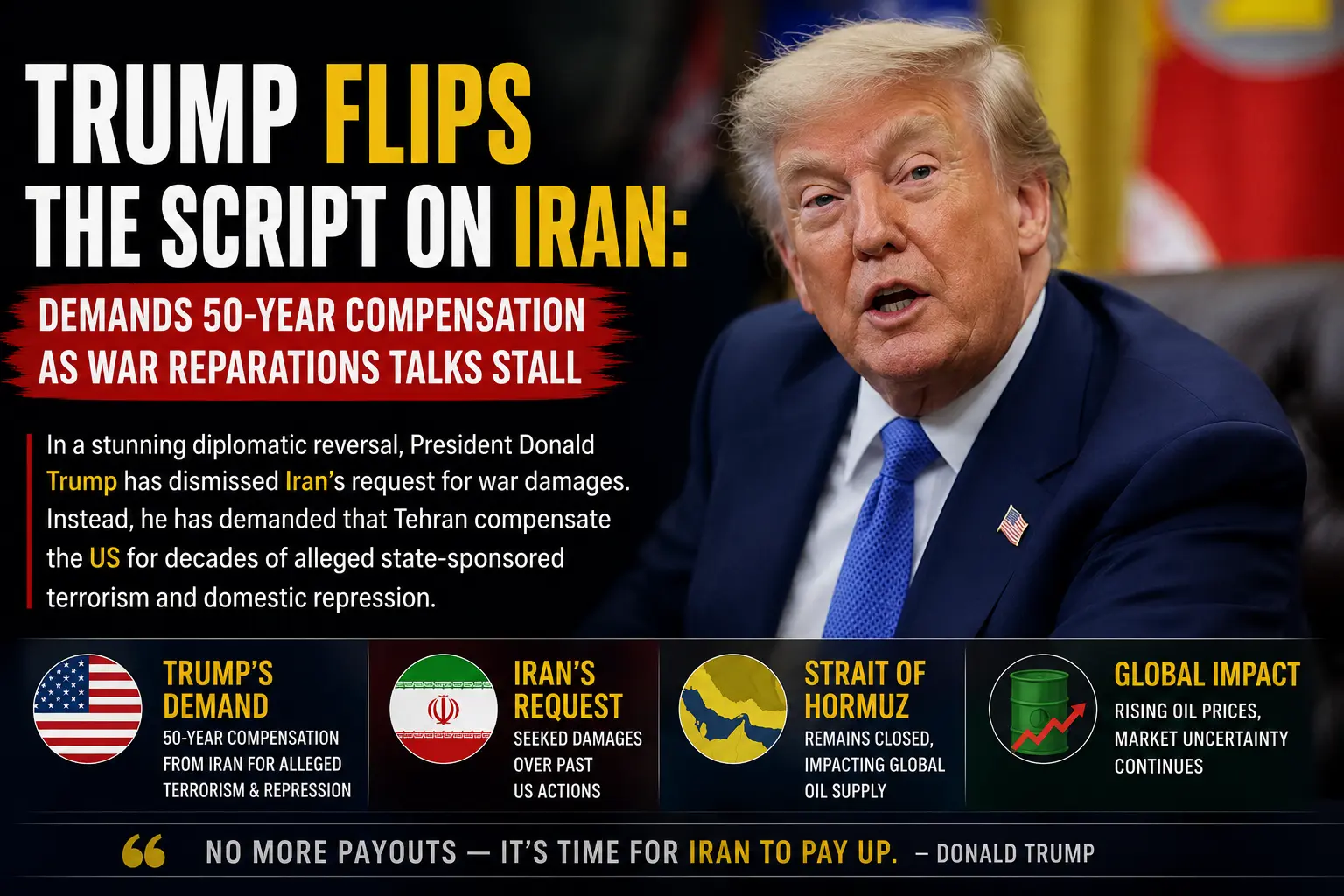
The ongoing conflict between the United States and Iran has moved into a complex new phase of diplomatic "legal warfare." While missiles and drones continue to disrupt the peace in the Middle East, a new battle has broken out over who owes whom for the destruction caused over the years. On Monday, U.S. President Donald Trump took to social media to shatter Tehran’s hopes for a quick financial settlement, turning the tables with a list of historical demands that could keep the two nations at odds for years to come.
Iran’s Demand for "War Damages"
Following months of U.S. and Israeli military operations within its borders, the Iranian leadership has insistently demanded "war reparations." Tehran claims that the destruction of its infrastructure, loss of lives, and the impact of long-standing economic sanctions entitle them to billions of dollars in compensation. More importantly, Iran has linked these payments directly to the reopening of the Strait of Hormuz—the world’s most critical chokepoint through which 20% of global oil travels.
Trump’s Counter-Strike: A 50-Year Invoice
President Trump, true to his unconventional diplomatic style, didn't just say "no" to Iran’s demands. He presented an even larger bill to Tehran. Posting on Truth Social, Trump called Iran’s request an "interesting idea" but insisted that the real accountability lies with the Iranian regime. He argued that before the U.S. pays a single cent, Iran must settle its debts for acts of aggression spanning the last five decades.
Trump highlighted several key events to justify his counter-demand:
The USS Cole Bombing: Though the bombing occurred in 2000 in Yemen, the U.S. has long alleged Iranian ties to the groups involved. Trump demanded compensation for the 17 sailors killed and the dozens injured.
The Legacy of Qassem Soleimani: Trump claimed that the former IRGC commander, who was killed in a 2020 U.S. strike, was responsible for thousands of American and regional deaths. He suggested that the "bill" for Soleimani’s actions is yet to be paid.
The 52,000 Protestors: In a startling claim, Trump stated that the Iranian regime has killed 52,000 of its own citizens in the last five months of civil unrest. He insisted that American negotiators include "restitution for the families of these victims" in any future peace talks.
The Economic Chokepoint: The Strait of Hormuz
While the leaders trade barbs, the global economy is feeling the pain. The Strait of Hormuz remains a "theatre of war." The Islamic Revolutionary Guard Corps (IRGC) has made it clear that no commercial vessels will have safe passage until Washington agrees to Tehran’s financial and political terms.
Despite President Trump’s recent public statements that the waterway is "fully open," shipping data and maritime insurance reports suggest otherwise. Vessels are avoiding the area due to sporadic drone attacks and the threat of seizing. This uncertainty has caused global oil prices to climb, affecting everything from gasoline prices in the U.S. to the cost of shipping goods in Asia and Europe.
A Widening Gulf in Negotiations
Military analysts and political observers warn that Trump’s move to bring up historical grievances like the USS Cole bombing significantly complicates the current peace process. By expanding the scope of the talks from the current conflict to the last 50 years of U.S.-Iran relations, the possibility of a "quick deal" has effectively vanished.
Iranian security chief Mohammad Bagher Zolghadr responded by reiterating that the regional allies of Iran—including those in Lebanon, Yemen, and Iraq—will not stop their resistance until all Iranian conditions are met. This suggests that the "chess game," as Trump previously described it, has now entered a state of stalemate.
Conclusion: The Toll of Uncertainty
The standoff between Trump’s demand for historical justice and Iran’s demand for modern war damages has left the world in a precarious position. If the U.S. follows through on Trump’s threat of a "massive bombing campaign" to force the strait open, the world could see a regional war unlike any before. On the other hand, if both sides refuse to compromise on their financial demands, the "economic blockade" of the world's oil supply could lead to a global recession.
As of now, the "theatre of war" remains active, the markets remain unsettled, and the price of peace seems to be rising every day.