Tackling the Drought Threat: How Andhra Pradesh is Spending ₹3,409 Crore to Secure Every Drop of Water
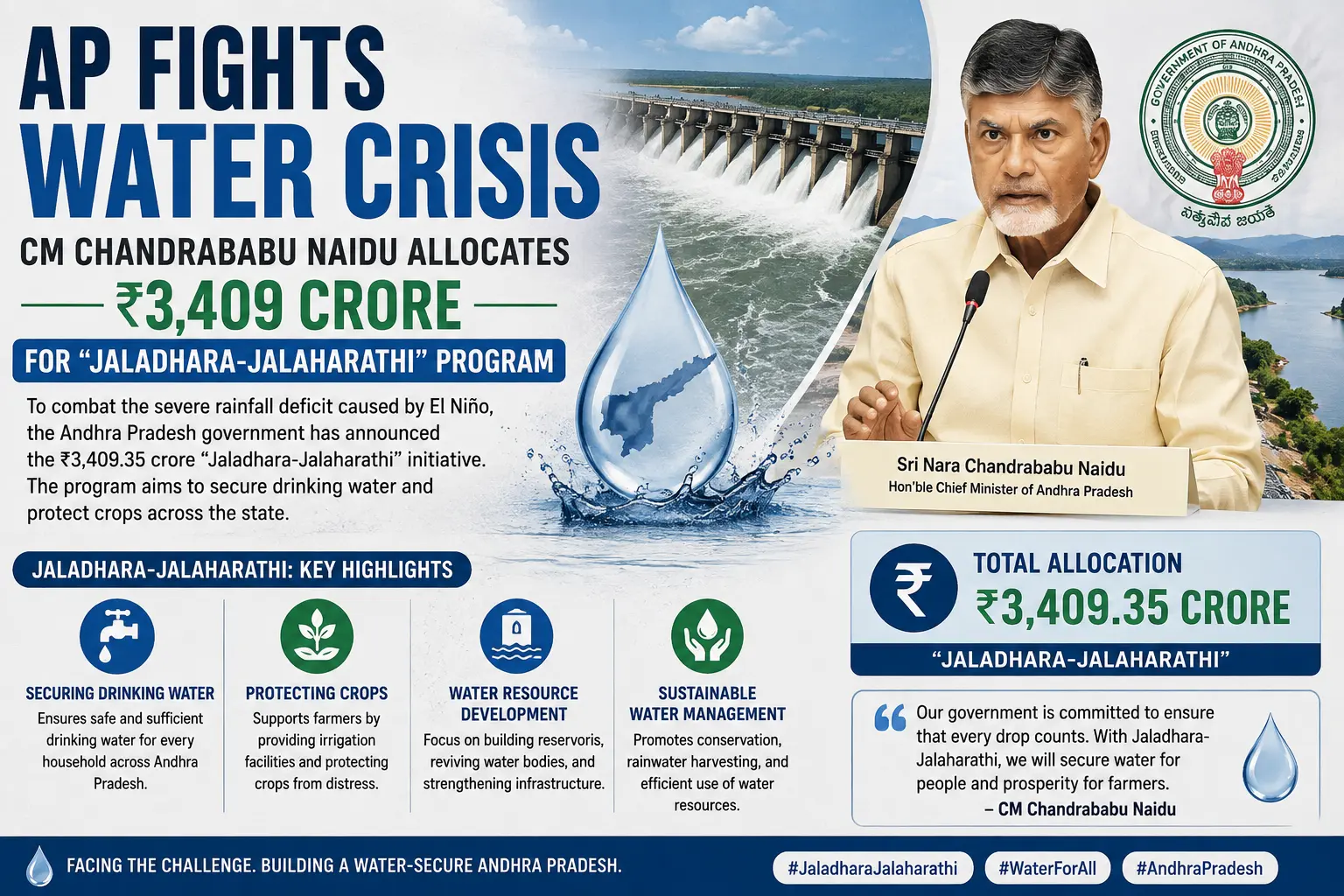
Andhra Pradesh is currently facing a unique and challenging climatic situation. While neighboring states like Maharashtra and Karnataka are witnessing heavy rainfall and floods, Andhra Pradesh is grappling with a significant lack of rain. This contrast is largely due to the "El Niño" phenomenon, which has disrupted the normal monsoon cycle in the state. Recognizing the potential for a severe drought, Chief Minister N. Chandrababu Naidu has taken a proactive stance by launching the "Jaladhara-Jalaharathi" program.
The program is not just a temporary fix but is designed to be a continuous effort to safeguard the state's water future. With an allocated budget of ₹3,409.35 crore, the government aims to ensure that no household goes thirsty and no farmer’s field remains parched. The Chief Minister has made it clear that water management is now a top priority for the TDP-JSP-BJP coalition government.
The Looming Threat: A 39% Rainfall Deficit
The weather department’s predictions for 2026 are concerning. Due to the intensification of El Niño, the state is expected to receive 39% less rainfall than average. Initially, it was estimated that the state would receive 867 mm of rain between June and December. However, current trends suggest only 525 mm might be recorded. This significant drop can lead to drying reservoirs and a dangerous dip in groundwater levels.
During a recent video conference, CM Chandrababu Naidu reviewed the situation and emphasized the urgency of the matter. He noted that even though the Srisailam reservoir is receiving some floodwater, it is primarily due to rains in upper riparian states. Local rainfall in AP remains dismal, making water conservation efforts like Jaladhara-Jalaharathi absolutely essential.
Breaking Down the ₹3,409 Crore Initiative
The massive funding for this program is being used to execute over 82,000 individual tasks across the state. Official reports state that 79,826 tasks have already been completed. These tasks focus on traditional yet highly effective water management techniques:
Restoration of Tanks: Villages across AP rely on local tanks for irrigation and drinking. By desilting and repairing these tanks, the government is increasing their storage capacity.
Feeder Channels: To ensure that rainwater actually reaches the tanks and reservoirs, feeder channels are being cleared and developed. This prevents water from being wasted on parched land before reaching a collection point.
Farm Ponds and Trenches: By digging small ponds and trenches in agricultural fields, the government is helping rainwater seep into the ground. This process, known as groundwater recharging, is vital for keeping borewells functional during dry spells.
Securing Drinking Water for Every Citizen
The most immediate concern for any government during a drought is drinking water. The Chief Minister has ordered officials to prioritize the filling of key reservoirs such as Velugodu, Gorakallu, Owk, Jeedipalli, and Cherlopalli. These reservoirs act as the primary source of drinking water for several districts.
District Collectors have been instructed to create comprehensive action plans. They must identify areas most likely to face shortages and prepare a fleet of water tankers if necessary. The CM stressed that the supply from the Nagarjuna Sagar canals should be carefully managed to meet the basic needs of the people before any other usage is considered.
A Shield for the Farming Community
Agriculture is the backbone of Andhra Pradesh's economy, and it is the first sector to suffer when rains fail. CM Naidu has urged Irrigation Minister Nimmala Rama Naidu to utilize every drop of floodwater entering the Krishna Basin. Farmers are being encouraged to adopt water-saving techniques and choose crops that require less water.
The government is also working to raise awareness among farmers about the "integrated management" of water resources. This includes educating them on how farm ponds can serve as a life-saving resource for their crops when the canals run dry.
A Call for Public Cooperation
Chief Minister Chandrababu Naidu concluded his review with a powerful message: water conservation is not just a government duty; it is a public responsibility. He called for "Jaladhara-Jalaharathi" to become a mass movement where every citizen understands the value of a single drop of water. By combining government funding with public awareness, the state aims to overcome the El Niño challenge and emerge stronger. The commitment of ₹3,409 crore is a testament to the government's resolve to keep Andhra Pradesh water-secure even in the harshest of seasons.