Trump’s Strategy Shift: Why Reopening the Strait of Hormuz May End the Iran War Without a Nuclear Deal
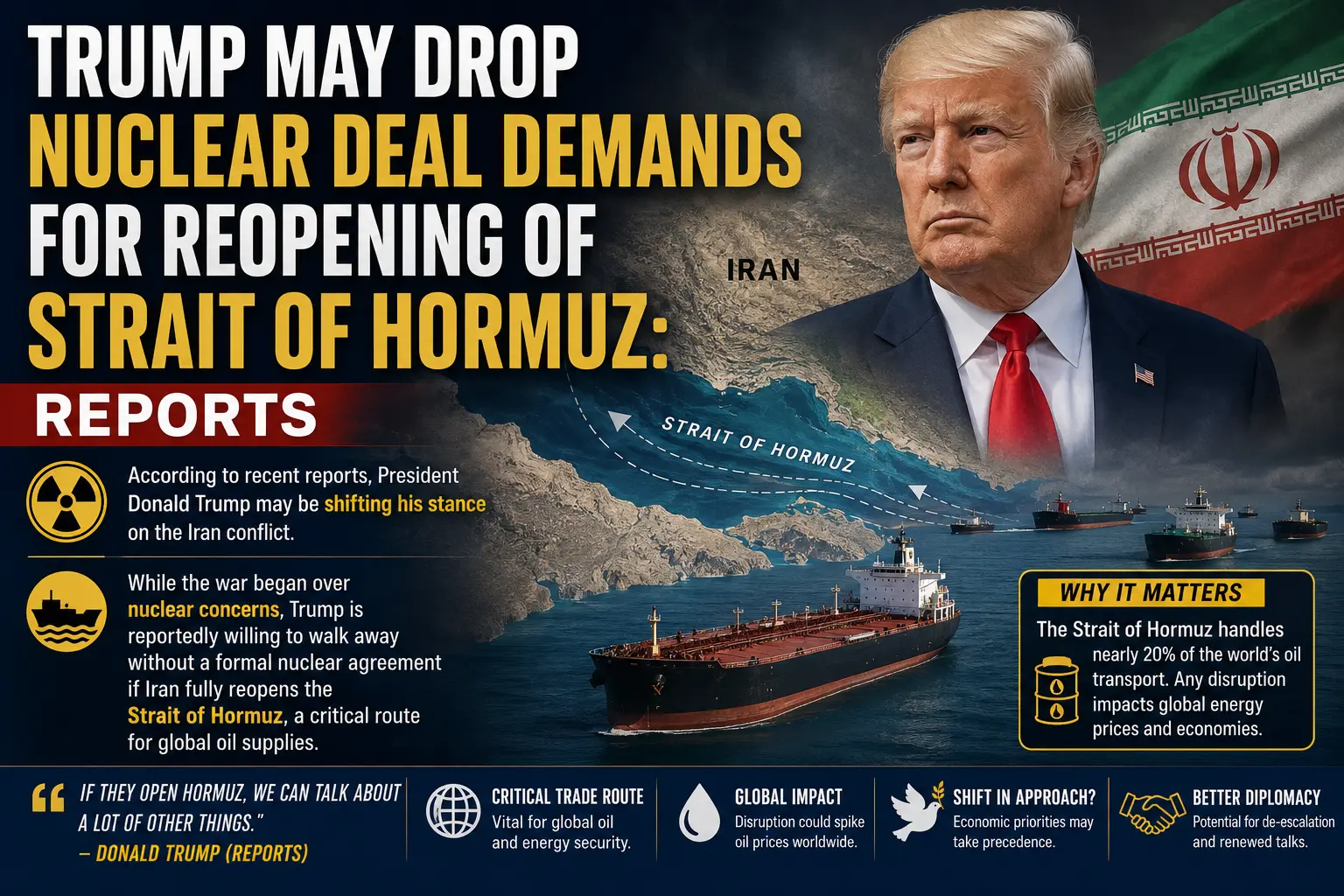
A new report suggests a significant pivot in U.S. foreign policy regarding the ongoing conflict with Iran. President Donald Trump, who initiated a military campaign in February 2026 primarily to stop Iran’s nuclear ambitions, is reportedly now willing to settle for a much smaller victory. According to The Wall Street Journal, Trump has privately told his senior aides that he is prepared to end the war and walk away without a formal nuclear agreement, provided that Tehran fully reopens the Strait of Hormuz.
The Strait of Hormuz is widely considered the world’s most important oil chokepoint. Located between Iran and Oman, this narrow waterway sees roughly 20% of the world’s global oil supply pass through it daily. Since the conflict began, Iran has utilized its drone and missile technology to disrupt and effectively close the route to American and allied vessels.
The Economic Pressure on Trump
The closure of this vital maritime passage has sent shockwaves through global energy markets. In the United States, gasoline prices have remained stubbornly high since late February, causing widespread dissatisfaction among American voters. For President Trump, the timing could not be worse. With the U.S. midterm elections less than three months away, the high cost of living is becoming a central campaign issue.
To alleviate this economic pressure, Trump is reportedly shifting his priorities. While a nuclear-free Iran remains the long-term goal, the immediate reopening of the sea route is seen as a more urgent necessity to lower gas prices and stabilize the economy before voters head to the polls.
Tehran’s Tough Bargaining
Iran, sensing Washington’s desperation, has laid out a stringent list of demands. Tehran isn't just asking for peace; it is asking for a complete reversal of U.S. policy in the Middle East. Their demands include:
The payment of billions of dollars in reparations.
An immediate end to the U.S. naval blockade.
The withdrawal of all American forces from the region.
The lifting of all economic sanctions and the release of frozen assets.
Washington has so far rejected these demands, particularly the notion of paying tolls for the use of international waters. However, the lengthy list of conditions suggests that Iran is in no rush to settle and may be prepared for a prolonged standoff.
The Political Stakes
Trump has recently made premature claims that the Strait of Hormuz is already fully operational. However, intelligence reports and shipping data suggest otherwise. The President is under immense pressure to show that his military intervention has achieved a tangible result. If he can secure the reopening of the oil route—even without a nuclear deal—he could frame it as a victory for the American consumer and the global economy.
However, critics argue that walking away without a nuclear agreement would render the entire military campaign pointless. If the war was started to stop nukes but ends merely to lower gas prices, it could be perceived as a strategic failure by international observers.
What Happens Next?
As the midterm elections approach, the diplomatic clock is ticking. The world is watching to see if the Trump administration will bow to Iran’s economic leverage or find a way to reopen the strait through continued military pressure. For now, the global oil market remains on edge, and the future of Middle Eastern stability hangs in the balance of this high-stakes maritime negotiation.