The Chess Game Continues: Why Donald Trump is Trading Missiles for Markets in the Iran Conflict
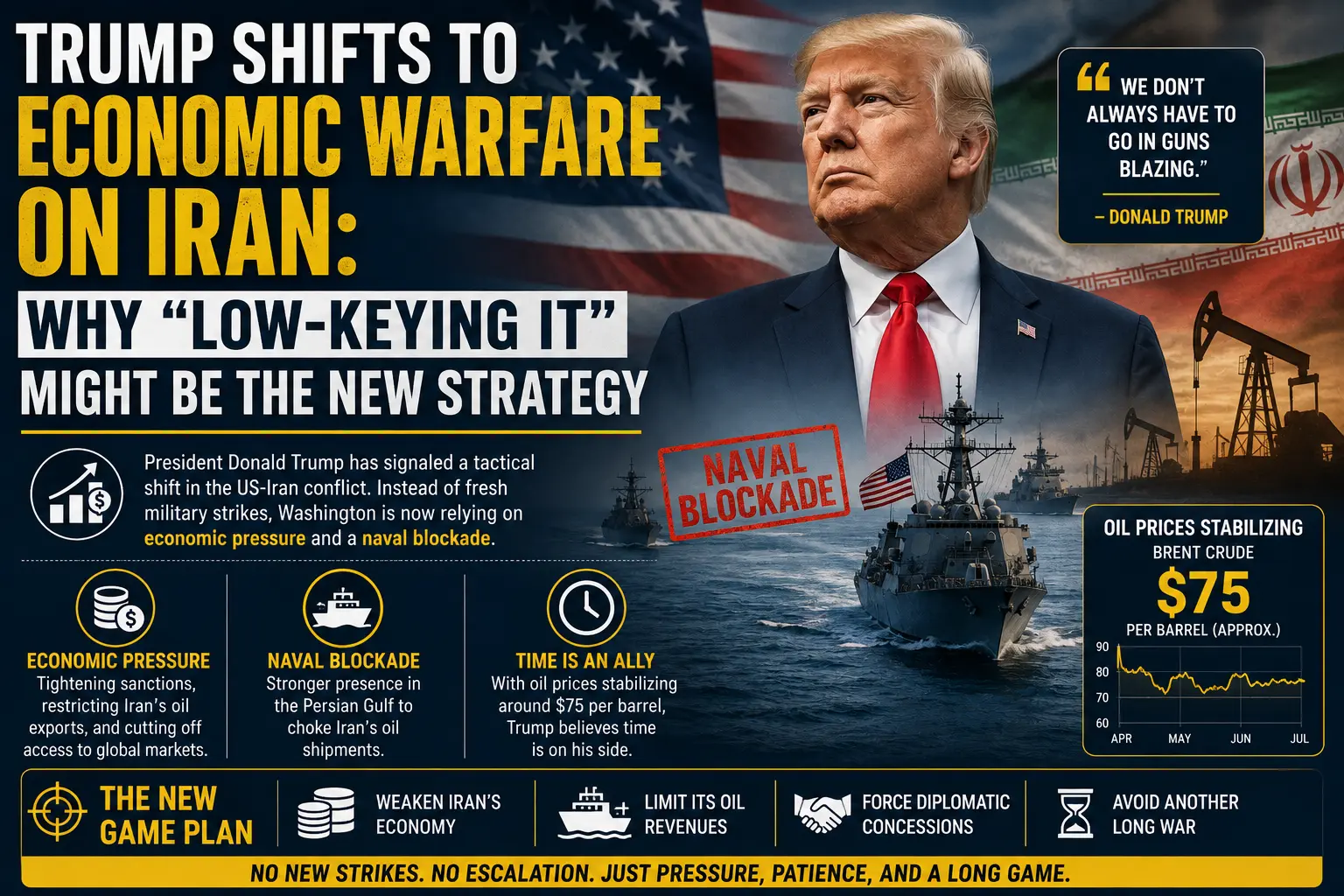
After months of intense military confrontation that threatened to engulf the entire Middle East, U.S. President Donald Trump has signaled a significant change in tactics. Washington is stepping back from the front lines of direct military strikes and moving toward a strategy of pure economic exhaustion. In a recent interview, Trump described the current approach as "low-keying it," suggesting that the United States is now letting the crushing weight of sanctions and a naval blockade do the talking.
This shift comes at a critical time when the global economy, and particularly the American consumer, is feeling the heat of the conflict. By focusing on economic pressure, Trump aims to neutralize the threat from Tehran without the unpredictability of a full-scale ground or air war.
Iran’s Crumbling Economy
According to President Trump, the primary reason for this shift is the visible impact on Iran's financial stability. Reports indicate that Iran is facing a domestic economic crisis characterized by skyrocketing inflation and a severe shortage of cash. Trump went as far as to say that Tehran is struggling even to pay its own military personnel.
"They are in very bad shape," Trump noted, attributing much of this distress to the U.S. naval blockade that has been in place since April. By cutting off major trade routes, the U.S. has effectively starved the Iranian economy of the vital revenue it needs to sustain a long-term war. Trump likened the strategy to a "chess game," implying that Washington is patiently waiting for Iran to reach a point where negotiation is the only option left.
The Oil Factor: A Relief for the White House
One of the biggest hurdles for any U.S. president during a Middle Eastern conflict is the price of oil. When the war began earlier this year, there were fears that gas prices would become unaffordable for the average American. However, recent trends have provided a much-needed reprieve for the White House.
Oil prices have stabilized and are now hovering just above $75 a barrel. This stabilization has eased the economic strain on American voters, giving Trump the political breathing room to pursue a more patient, "low-key" foreign policy. As the U.S. midterm elections approach, keeping gas prices under control is a top priority for the administration, and the current economic strategy serves that purpose perfectly.
A Breakthrough at the Strait of Hormuz?
The most critical flashpoint in this conflict remains the Strait of Hormuz. For months, the passage of commercial vessels through this oil chokepoint has been blocked or under constant threat. However, there are signs of diplomatic movement. Mediated by Oman, talks between Washington and Tehran are reportedly reaching their final stages.
The goal is to establish specific coordinates for a new, secure shipping route through the strait. While a breakthrough seems close, Iran remains firm on its conditions. Tehran has demanded that the U.S. lift its naval blockade and pay for damages caused during the conflict before the waterway is fully reopened. Trump’s new "low-key" approach might be an attempt to show flexibility in these negotiations while maintaining the economic upper hand.
Regional Instability and Failed Ceasefires
The road to peace is still fraught with obstacles. A ceasefire reached in June collapsed almost as soon as it began due to disagreements over maritime control. Since then, fighting has flared up intermittently. Iranian-aligned groups continue to launch strikes against U.S. bases in Kuwait, Jordan, and Bahrain. Meanwhile, in a separate but related development, Yemen’s Houthi rebels have imposed their own naval blockade against Saudi Arabia.
There are also reports of growing friction between Washington and its closest ally, Israel. Israeli leaders are reportedly concerned that the U.S. is not moving fast enough to conclude the fighting on multiple fronts, including the conflicts in Gaza and Lebanon.
Future Outlook
President Trump’s move to favor economic warfare over military might is a gamble. It relies on the belief that the Iranian regime will break under financial pressure before regional tensions explode into something larger. If the talks mediated by Oman succeed in reopening the Strait of Hormuz, it would be a major diplomatic victory for Trump. However, if Iran continues its intermittent strikes and refuses to back down, the "chess game" could quickly turn back into a shooting war. For now, the world waits to see if markets can indeed accomplish what missiles could not.